

Organize Workflows with folders
Folders help your team find Workflows quickly and control access at a group level.1
Create a folder
On the Workflows page, click Create a Folder. Enter a name and choose an access level: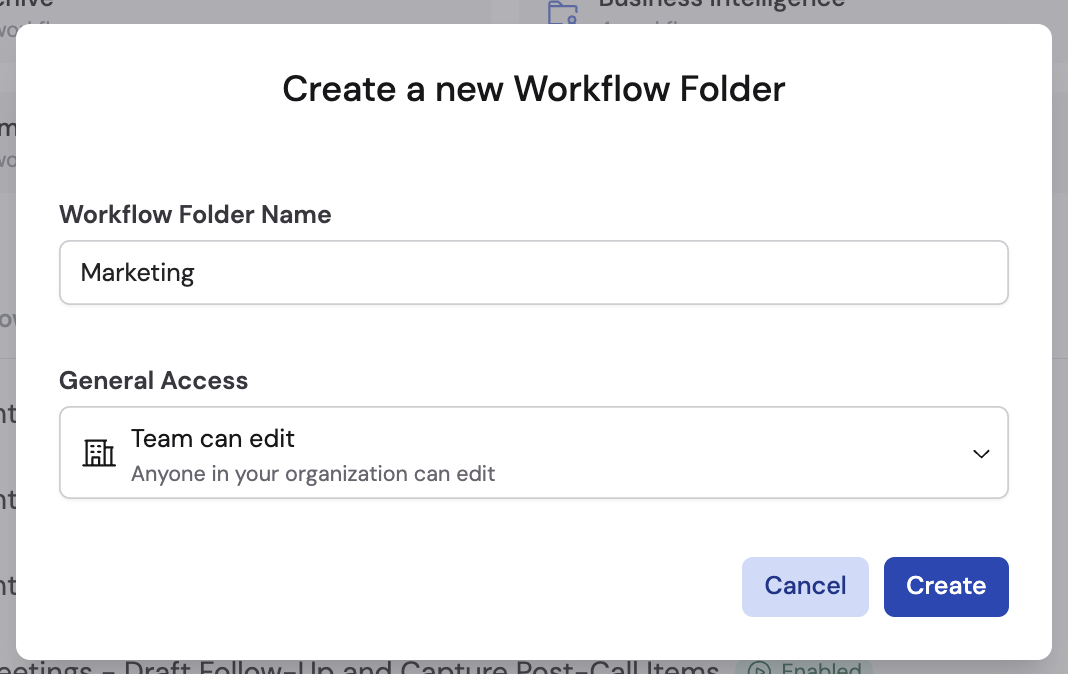
- Team can edit — anyone in your organization can view and edit Workflows in this folder.
- Team can view — anyone can view, but only you and explicitly added people can edit.
- Restricted — only specific people and groups you choose can access the folder.
2
Move Workflows into folders
Drag and drop Workflows from the main list into a folder. You can also move Workflows to the Private section to make them visible only to you.
3
Update folder permissions
Click the … menu on a folder and select Share. Change the access type or add/remove specific people and groups. For each person or group, set Can edit or Can view granular permissions.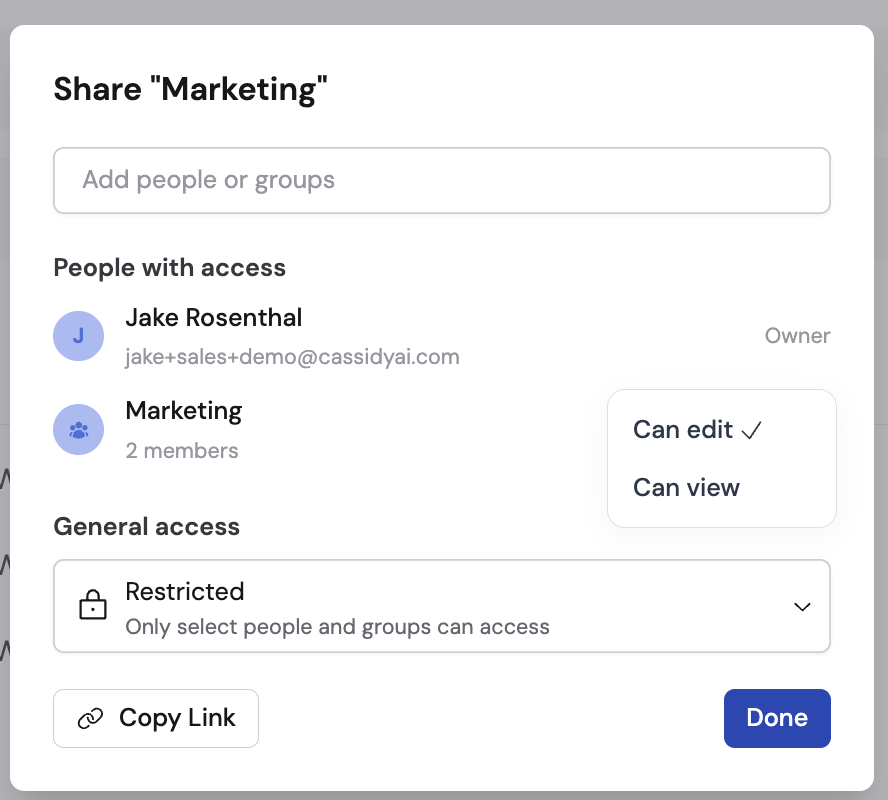
Copy links from the Run view
On the Run tab, click the link icon in the header and choose an option: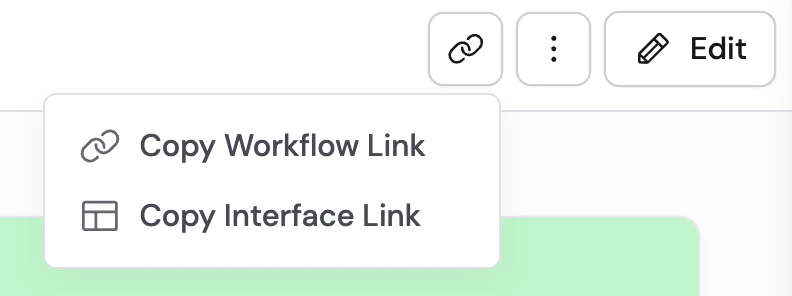
- Copy Workflow Link — Opens this Workflow inside Cassidy (recipients need access).
- Copy Interface Link — Opens a focused page to run the Workflow. Layout and labels follow your Interface settings.
Pin a Workflow
Pin a Workflow when you want quick access from the main sidebar and Workflow selectors. Only published Workflows can be pinned. Open the Workflow’s … menu and select Pin to sidebar. Personal pins are visible only to you. Admins with the Customize Pinned Resources privilege can instead select Pin for organization. An organization pin appears for everyone who already has access to the Workflow.Manage permissions from the editor
You can also update a Workflow’s location and permissions while editing it.1
Open sharing options
In the Workflow editor, click the … menu and select Organize & Share Workflow under Sharing.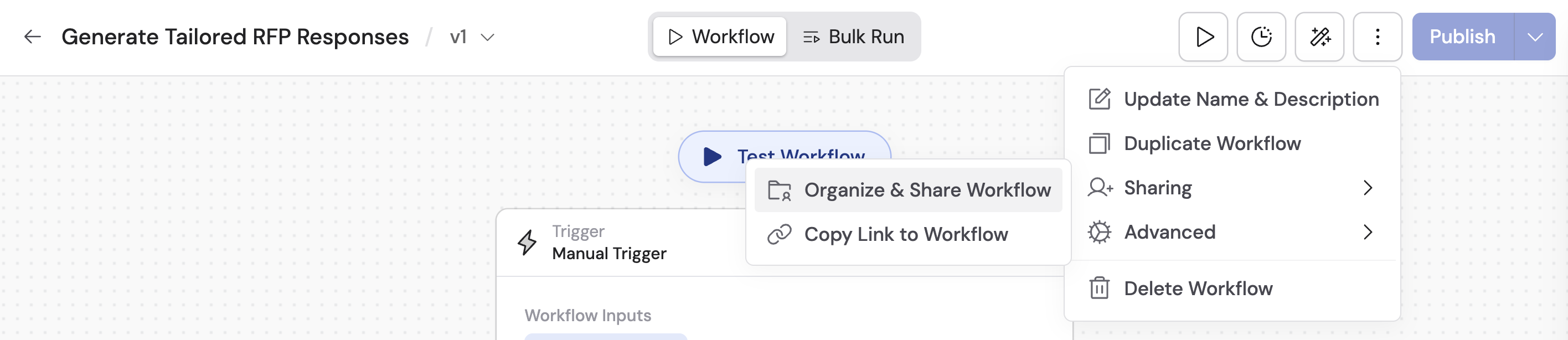
2
Choose a location
A modal appears showing your Team and Private sections and any folders within them. Select where to save the Workflow, or create a new folder directly from this modal.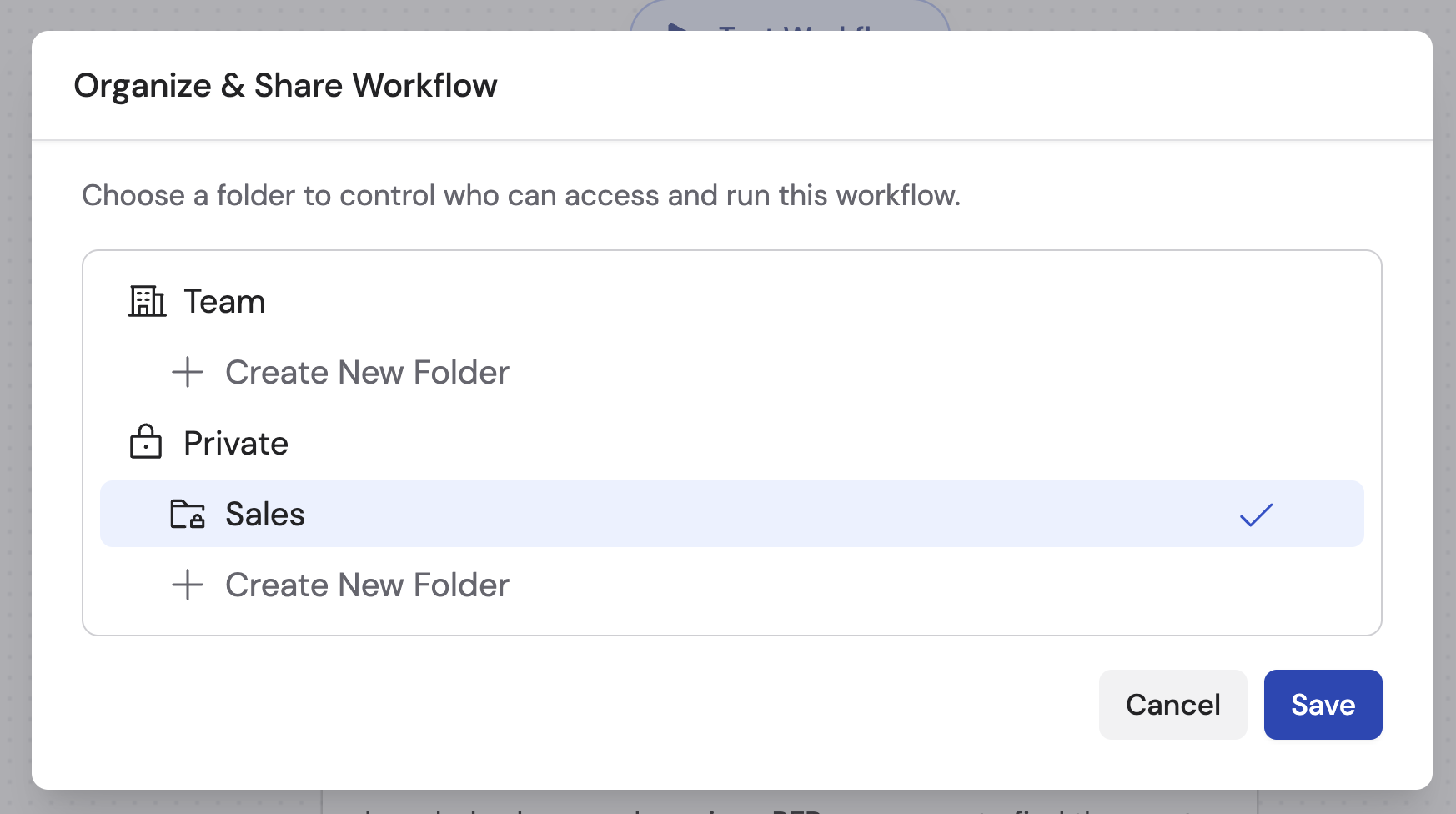
3
Save
Click Save to apply the changes.
Deploy externally
You can run Cassidy Workflows from outside the platform by using webhook triggers and returning results to your external systems.1
Use a Webhook trigger
When building your Workflow, select Webhook as the trigger type. Copy the unique webhook URL that Cassidy generates.
2
Configure your external system
Set up your website, app, or automation tool to send a POST request to the webhook URL when the relevant event occurs (e.g., a form submission or a record update).
3
Return results to the caller
You have two options for sending results back:
- Return results from webhook — toggle this option in the Webhook trigger settings. The Workflow’s output is automatically returned as the HTTP response to the incoming request.
- Send API Request action — add this action at the end of your Workflow to POST results to a specific endpoint in your system. This gives you full control over the URL, method, headers, and body.
Set up failure notifications
Stay informed when Workflows encounter errors so you can address issues quickly.1
Access account settings
Click your profile in the sidebar, then select Account Settings.
2
Open Notifications
In Account Settings, click Notifications.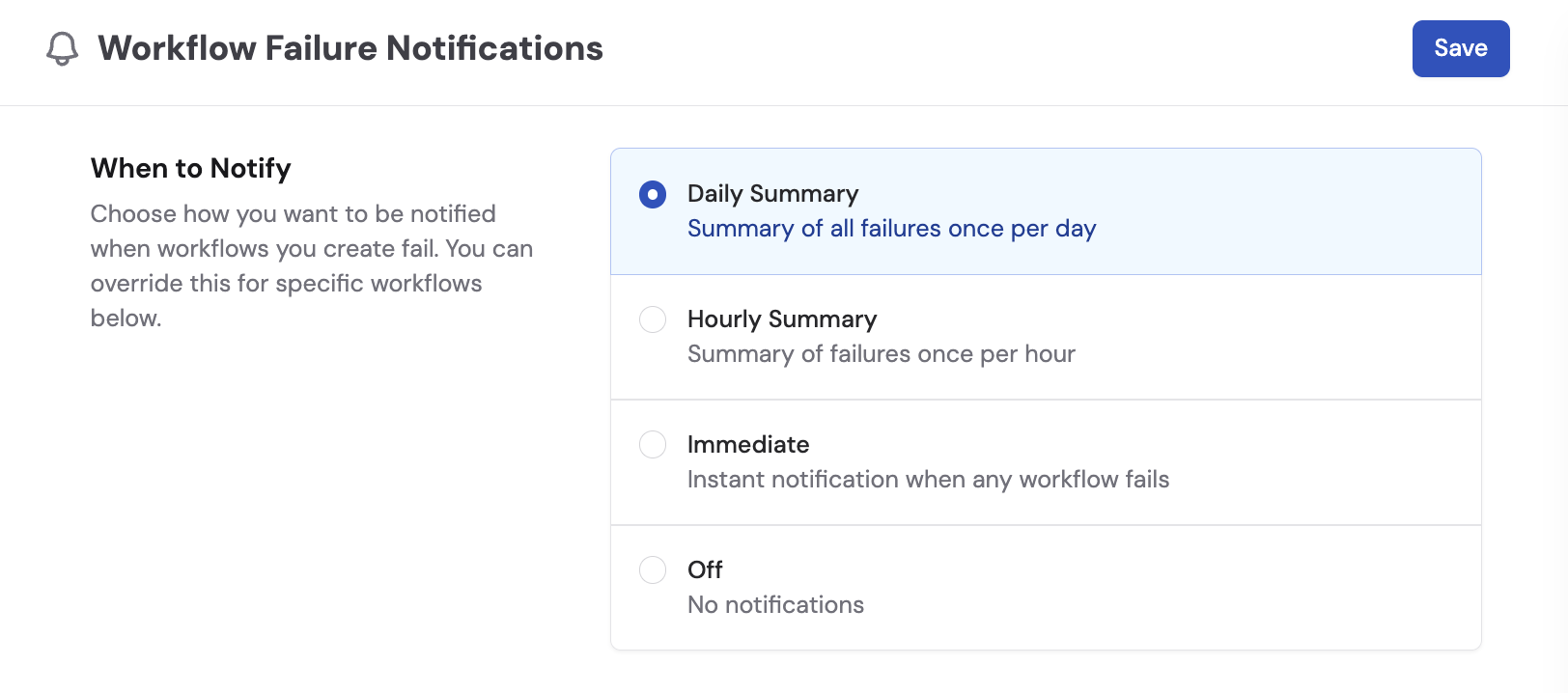
3
Configure default notifications
Choose how you want to be notified about failures for Workflows you create:
If you have not chosen a personal setting, Cassidy uses your organization’s default. That default starts as Off until an admin changes it in Organization Settings under Notifications → Workflow Notifications. Saving a different option here overrides the organization default. You can reset to the organization default at any time.Click Save to apply.
4
Subscribe to other Workflows
To receive alerts for Workflows you did not create, click + Add Subscription.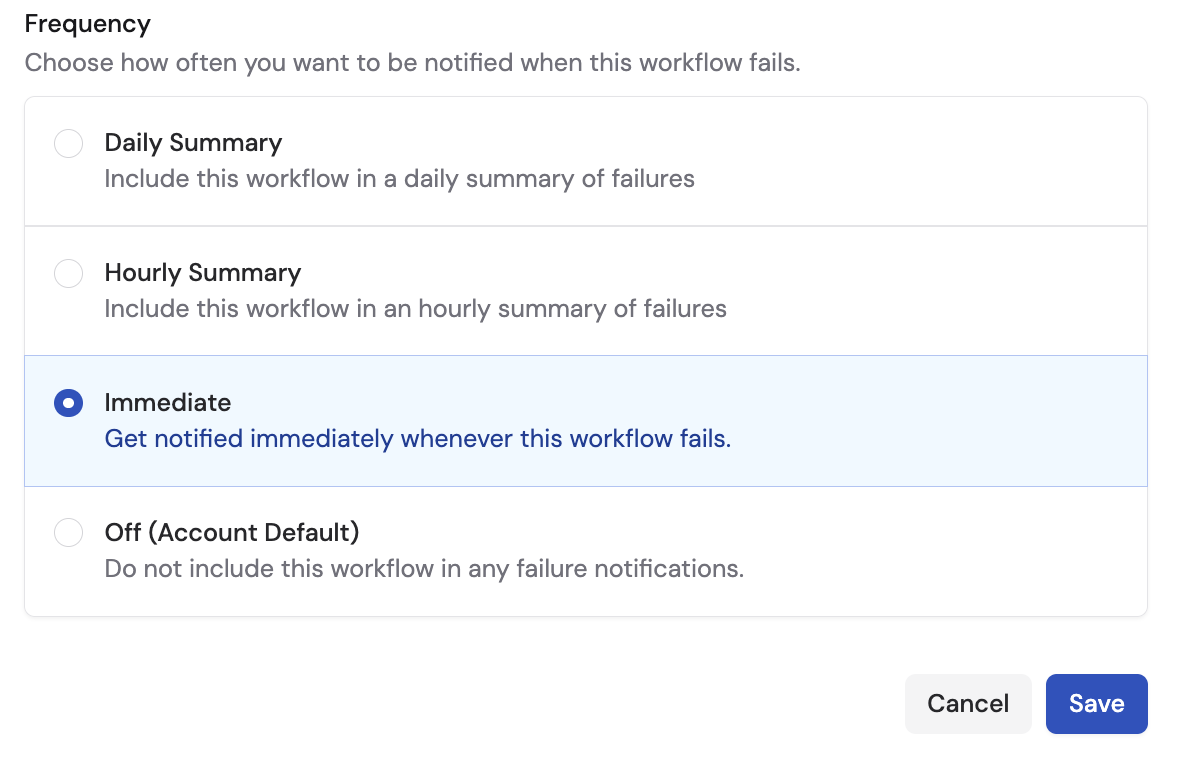
5
Select a Workflow and frequency
Click the No workflow selected dropdown and choose the Workflow you want to be notified about. Select a notification frequency and click Save.
6
Manage existing subscriptions
From the subscriptions list, you can search your active subscriptions, update the notification frequency, or remove subscriptions you no longer need.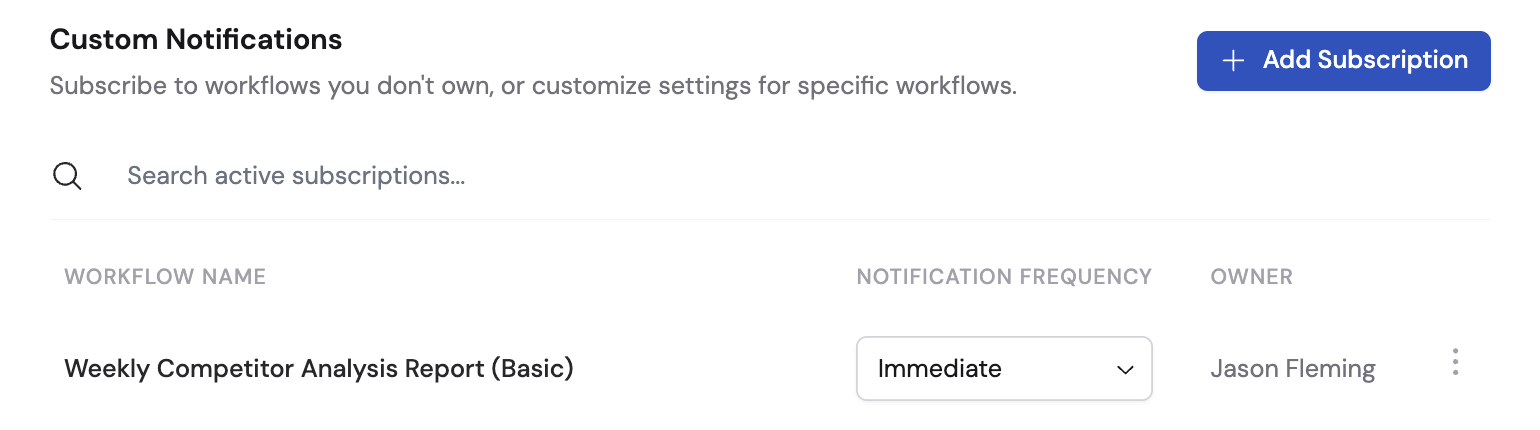
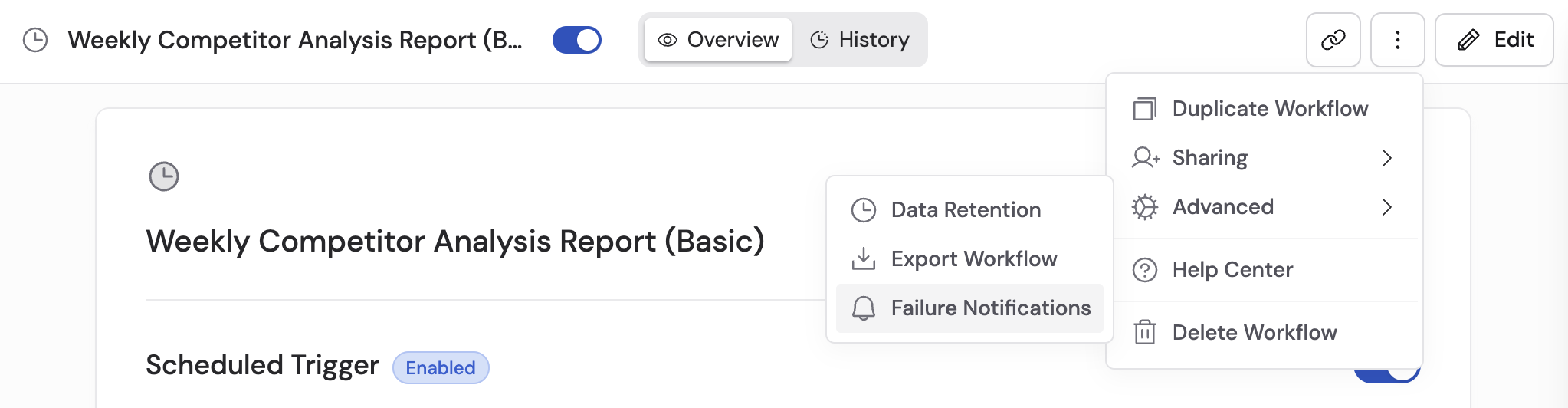
What do failure notifications look like?
What do failure notifications look like?
When a Workflow fails, you receive a Workflow alert containing the error details, the affected Workflow name, and an error summary. The notification includes links to Edit this Workflow (to fix the issue) and View Failed Workflow Run (to inspect the specific run).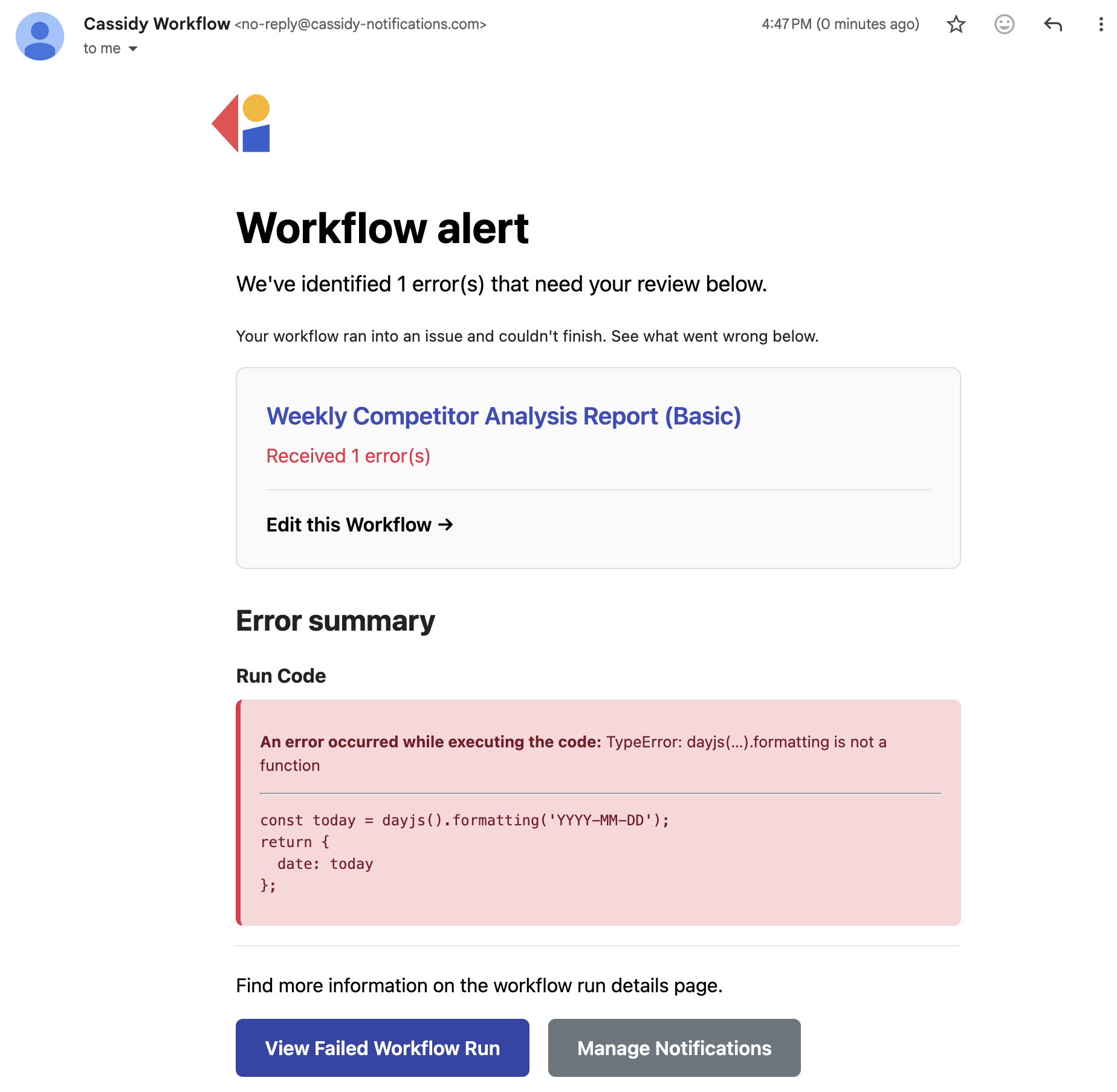
Next steps
Set default workflow notifications
Admins can choose the organization-wide default for workflow failure emails.
Configure data retention
Control how long Workflow run history is stored.
Use secret keys
Securely store API keys and passwords for use in Workflow actions.
Manage roles and groups
Set up teams and roles to streamline Workflow permissions.
Build a Workflow
Go back to creating and configuring Workflows.