

@workflows.cassidyai.com. Any email sent to that address triggers the Workflow and makes the sender, subject, body, attachments, and other fields available as variables.
Set up an Email trigger
1
Add an Email trigger
Create a new Workflow with an Email trigger, or change an existing Workflow’s trigger type to Email.
2
Set the email address
Your Workflow gets a dedicated email address like 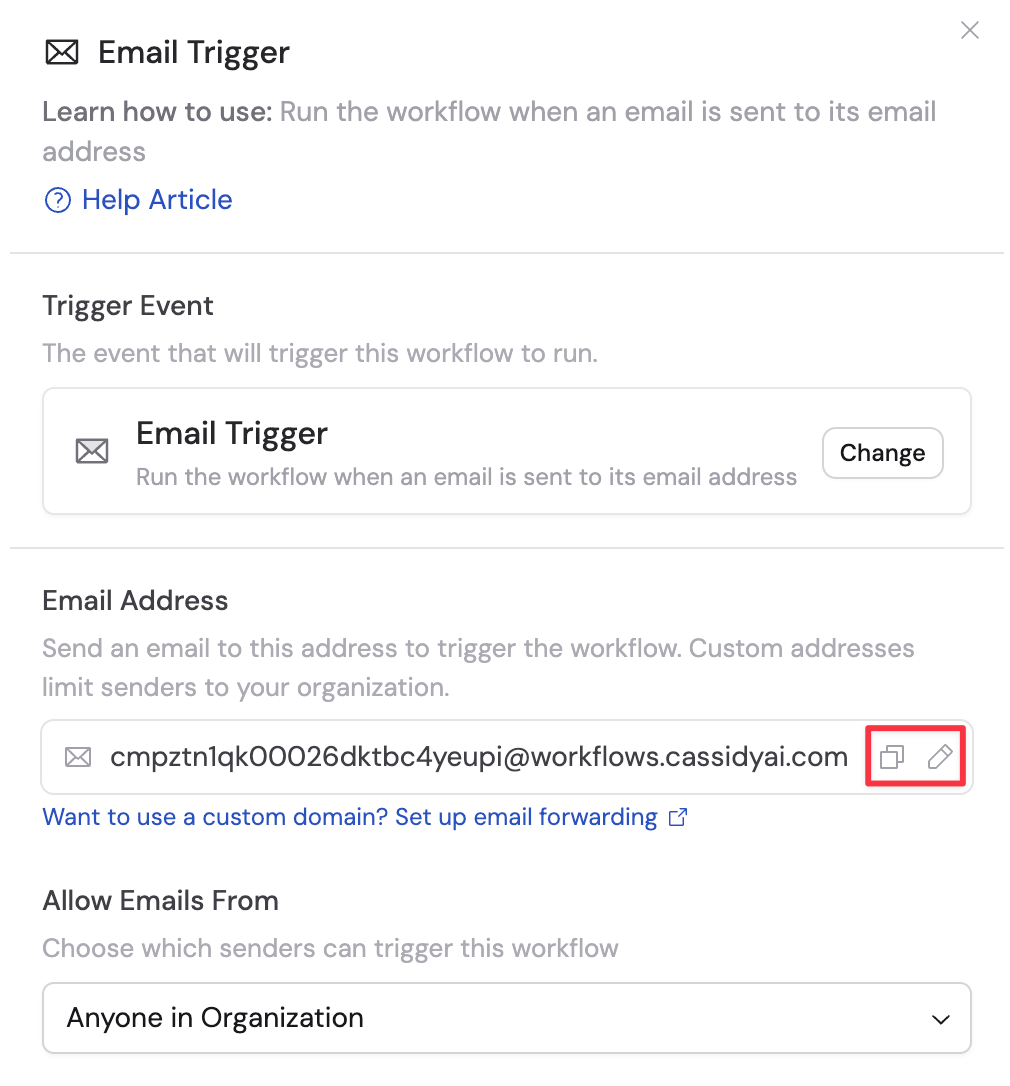
abc123@workflows.cassidyai.com. The part before the @ defaults to the Workflow’s ID but can be customized (e.g. support-tickets@workflows.cassidyai.com).3
Choose who can trigger the Workflow
Under Allow Emails From, select a sender filter to control which emails are accepted: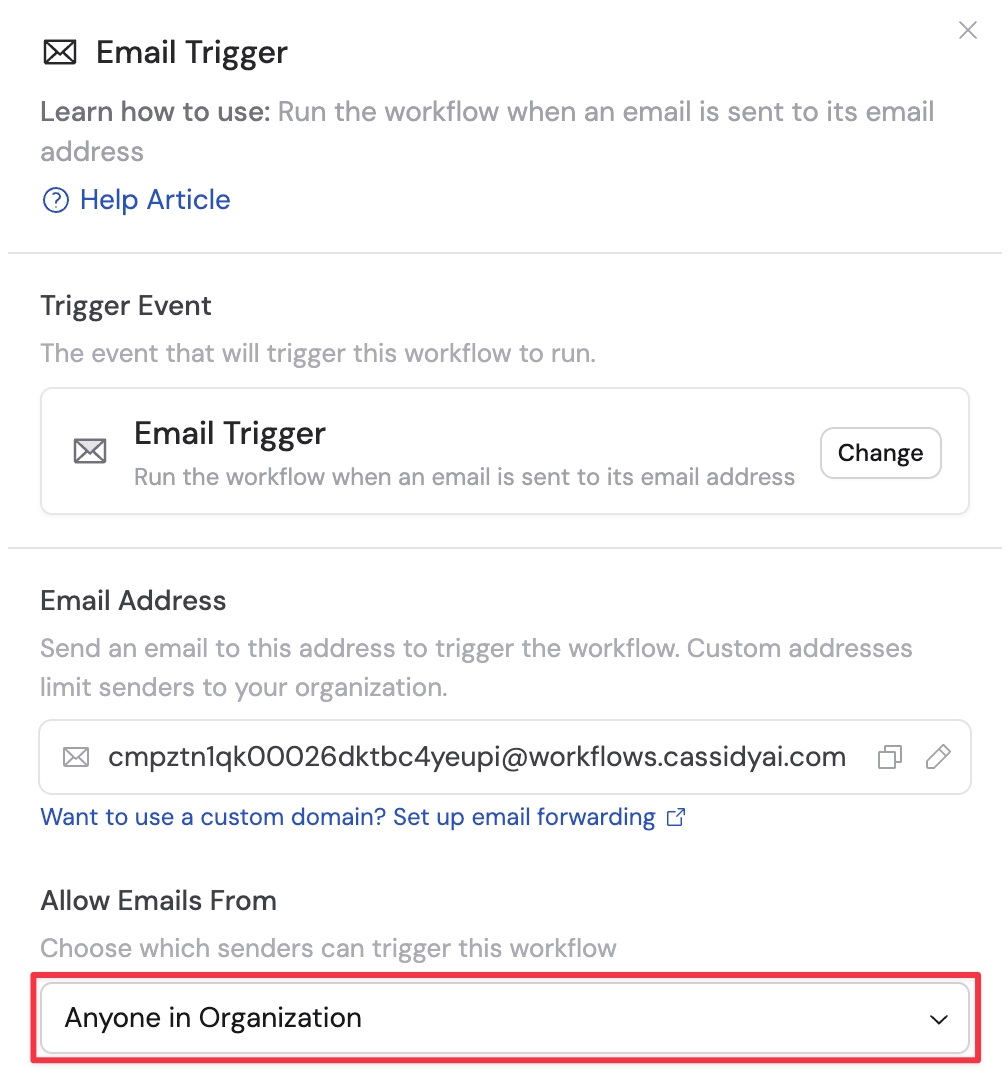
4
Add allowed senders (Specific Senders only)
If you selected Specific Senders, add the email addresses or domains that should be allowed to trigger this Workflow. You can mix individual addresses (e.g. 
user@example.com) and entire domains (e.g. example.com).5
Activate the trigger
Publish the Workflow and toggle the trigger on. The Workflow now runs automatically whenever an accepted email arrives at its dedicated address.
Custom address and organization restrictions
When you set a custom email address (any name other than the Workflow’s ID), Cassidy automatically restricts senders to members of your organization. This means:- The Anyone sender filter is disabled — you must use Anyone in Organization, Users with Access, or Specific Senders
- With Specific Senders, only senders who are also members of your organization can trigger the Workflow If you need to accept emails from anyone (including people outside your organization), use the Workflow’s default ID-based address.
Use a custom domain with email forwarding
By default, every Email trigger uses an@workflows.cassidyai.com address. If you want emails sent to your own domain (e.g. support@yourcompany.com) to trigger a Workflow, set up email forwarding from your mail provider.
This is useful when you want:
- A branded, professional email address customers already recognize
- To route existing email aliases or distribution lists into a Workflow
- To keep your internal email addresses visible to senders instead of a Cassidy address
How it works
Your mail provider receives the email at your custom domain address, then automatically forwards it to the Workflow’s@workflows.cassidyai.com address. Cassidy processes the forwarded email the same way as a direct one — the original sender, subject, body, and attachments are all available as variables in your Workflow.
Set up forwarding
1
Copy your Workflow's email address
In the Email trigger configuration, copy the Workflow’s
@workflows.cassidyai.com address.2
Create a forwarding rule in your email provider
Set up a forwarding rule that sends incoming messages to the Cassidy address you copied. The exact steps depend on your provider:
- Google Workspace — Use routing rules in the Admin Console under Apps > Google Workspace > Gmail > Routing
- Microsoft 365 / Exchange — Use mail flow rules (transport rules) in the Exchange Admin Center
- Other providers — Look for “email forwarding”, “mail routing”, or “alias” settings in your provider’s admin panel
3
Send a test email
Send a test email to your custom domain address and verify the Workflow runs by checking View Previous Runs on the Workflow detail page.