

May 2026 update: Microsoft Teams changed its app and bot creation policies. Cassidy can no longer create the Microsoft Teams bot for you automatically, so this guide walks you through creating the bot in Microsoft Teams and using Cassidy to generate the app package.
Prerequisites
- An Agent created in Cassidy
- Access to the Teams Developer Portal
- The ability to create a Microsoft Teams bot
- Permission to submit custom apps for approval in Microsoft Teams, or a Teams admin who can upload the app package for you
- Your Microsoft 365 Tenant ID
- A Teams admin who can approve the app after you submit it
How Microsoft Teams deployment works
Cassidy generates the Microsoft Teams app package for you. You create the bot in the Teams Developer Portal, paste Cassidy’s callback URL into the bot, download the app package from Cassidy, import the package into Teams, and submit the app for approval. Publishing the app in the Teams Developer Portal submits the app to your organization. A Teams admin must approve the app in the Teams admin center, then install it for users or make it available for users to install.Deploy your Agent
1
Open the Microsoft Teams deployment
In Cassidy, open the Agent you want to deploy. Go to the Deployments tab and click Connect on the Microsoft Teams card.
2
Enter app details
Fill in the details Cassidy will use to generate the Microsoft Teams app package: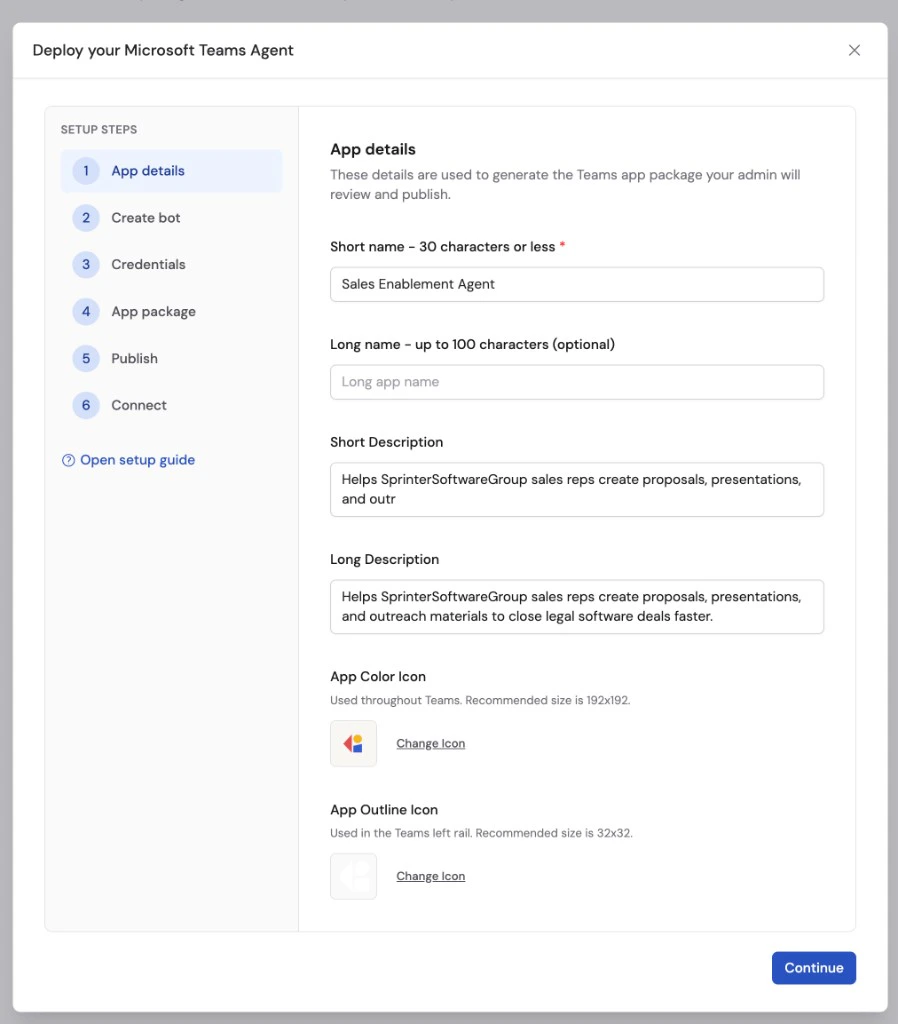
- Short name — The app name shown in Teams. Microsoft requires 30 characters or fewer.
- Long name — Optional. Use this if your full app name is longer than the short name.
- Short description — A brief description of the app.
- Long description — A fuller description for app review.
- App color icon and App outline icon — The icons shown in Teams.
3
Create the bot in Microsoft Teams
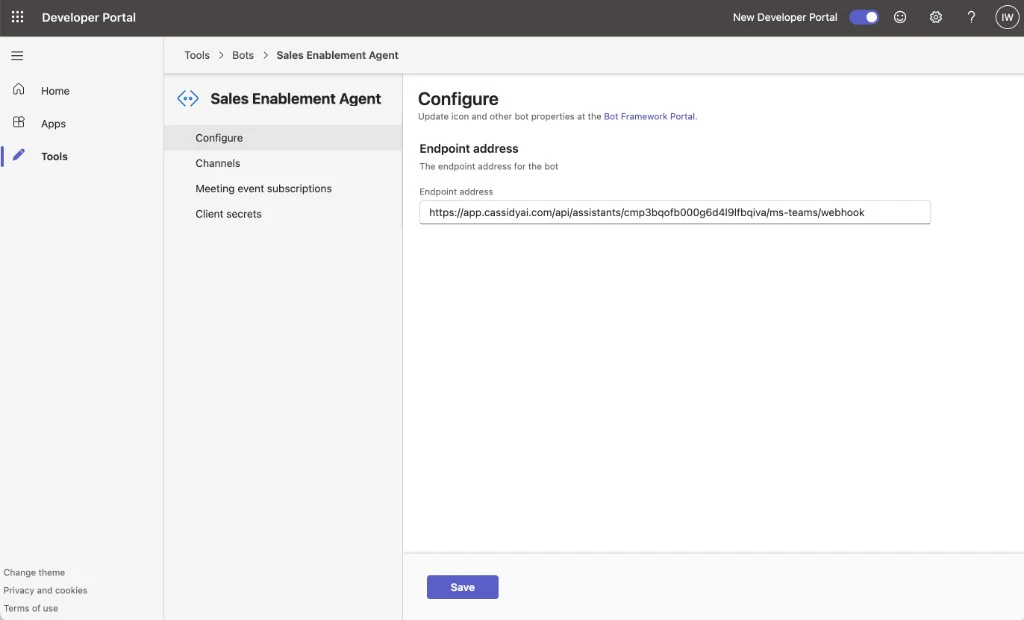
Open the Teams Developer Portal bot management page. Click New bot, give the bot a name, and create it.In the bot’s Configure tab, paste the callback URL from Cassidy into Endpoint address and save the bot.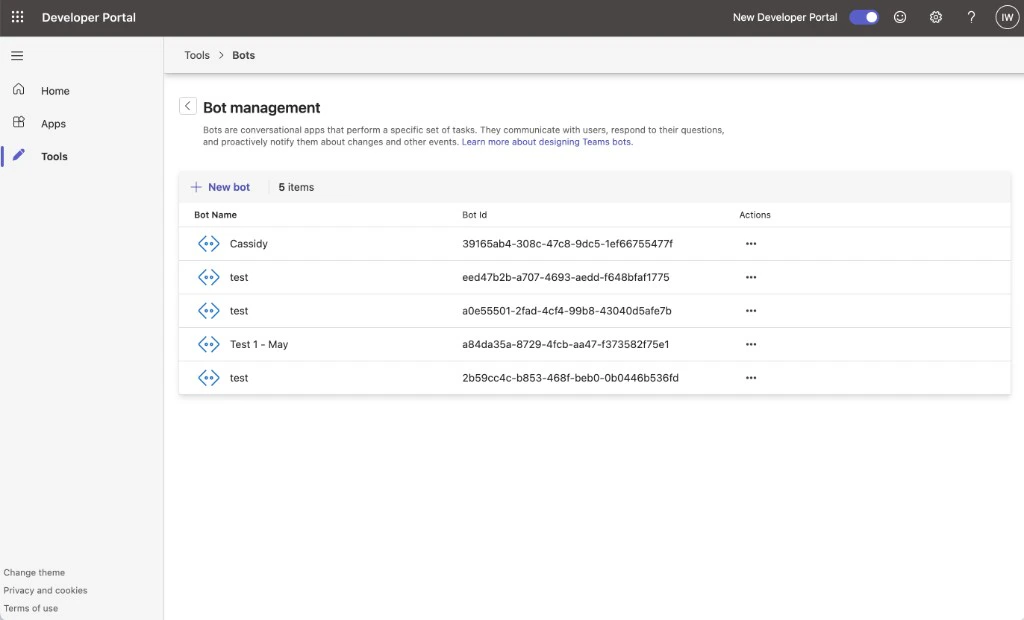
4
Create a client secret
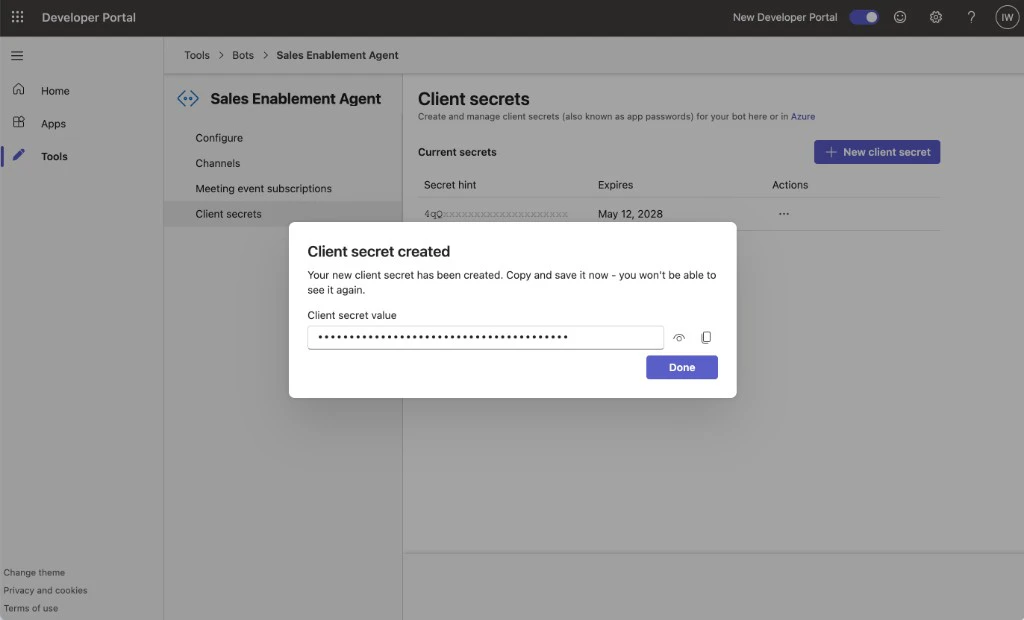
In the bot’s Client secrets tab, click Create your first client secret or New client secret.Copy the client secret value shown after creation. Microsoft only shows this value once. Do not copy the secret hint.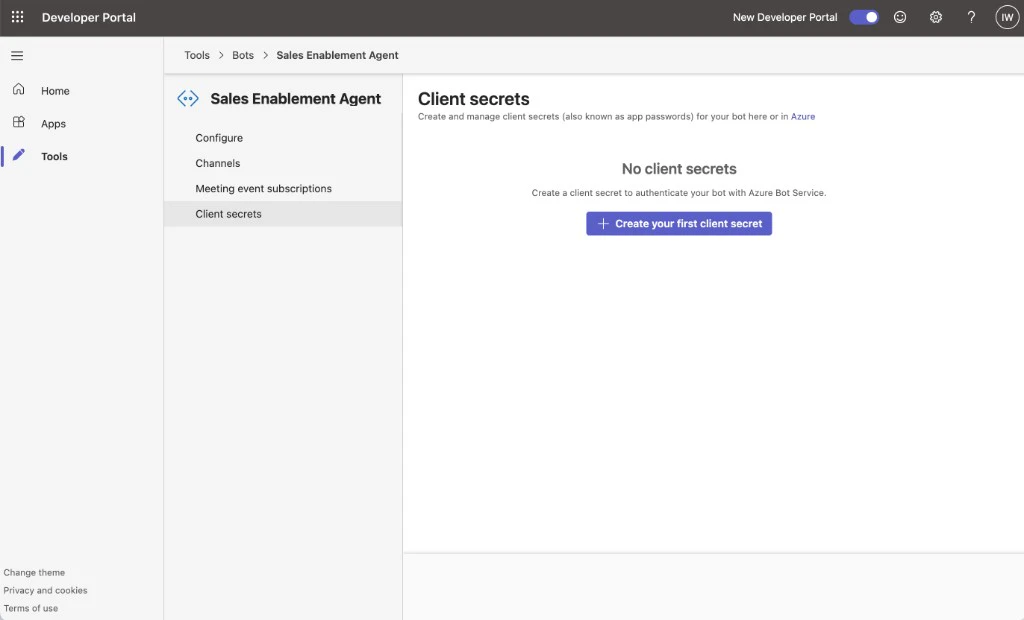
5
Save the bot credentials in Cassidy
Return to Cassidy and paste: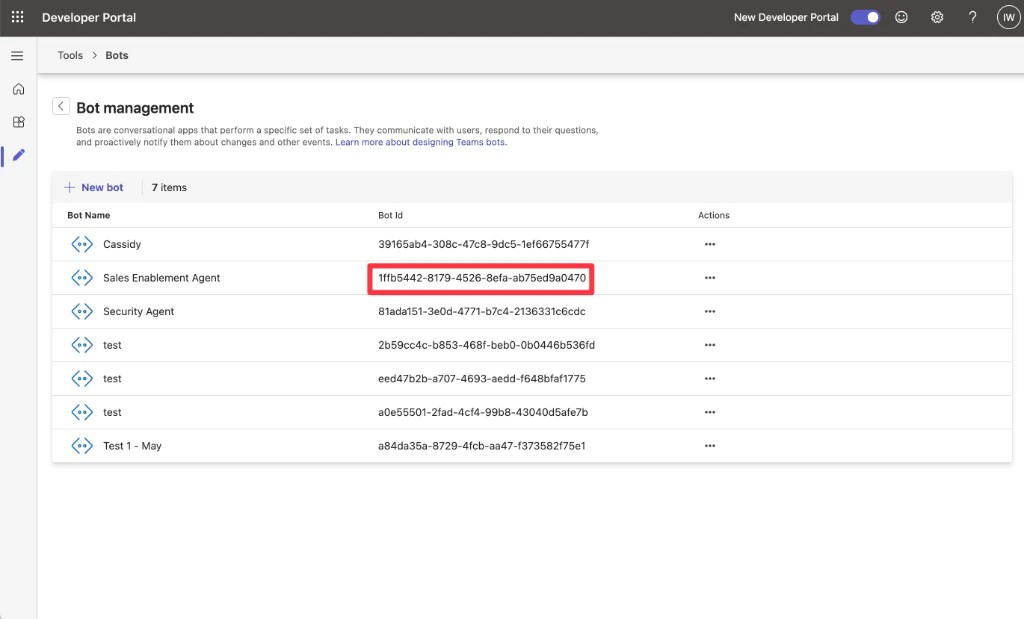
- Bot ID — On the Teams Developer Portal Bot management page, copy the value from the Bot Id column for the bot you created. You can also paste the full bot page URL and Cassidy will extract the Bot ID for you.
- Client secret — Paste the one-time secret value from the previous step.
- Tenant ID — Paste your Microsoft 365 Tenant ID.
6
Download the Teams app package
In Cassidy, click Download Teams app package.Cassidy downloads a 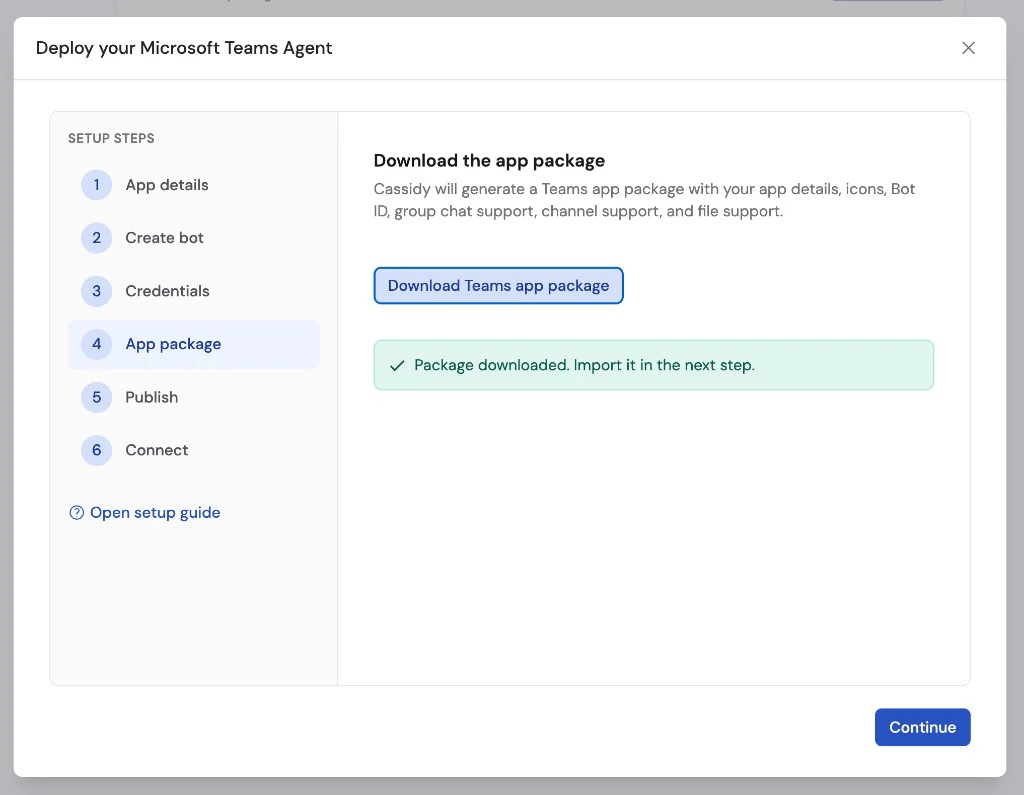
.zip file that contains the Teams app manifest and icons. The app package includes your bot ID, personal chat support, group chat support, channel support, and file support.7
Import the app package
In the Teams Developer Portal, go to Apps and click Import app. Use the import button to select the 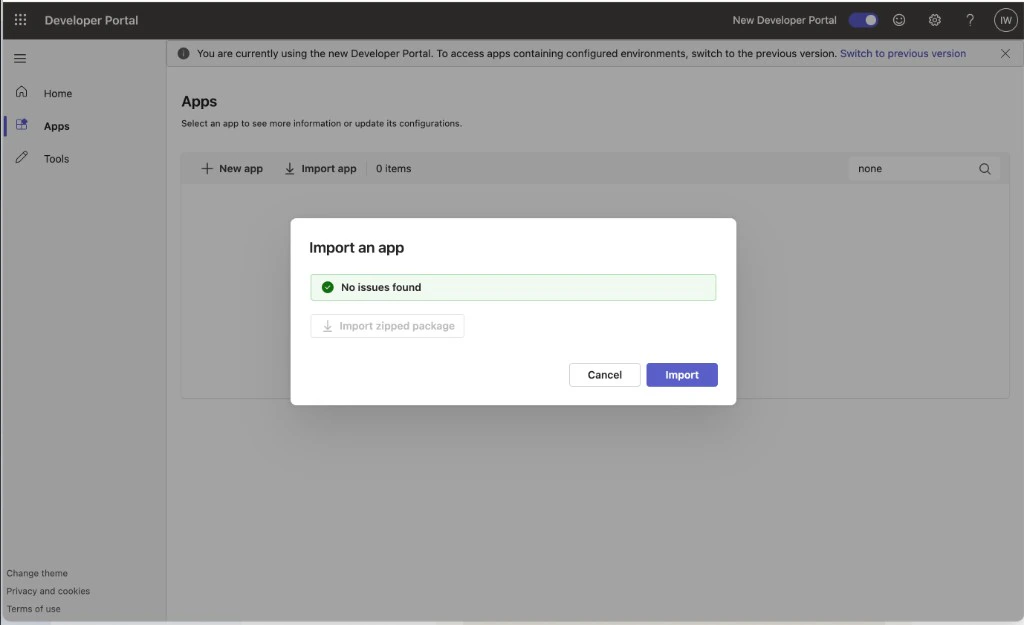
.zip file you downloaded from Cassidy.Cassidy already generated the app package with your bot configuration, so you do not need to manually add the bot after importing.8
Submit the app to your organization
In the Teams Developer Portal, open Publish > Publish to your org and submit the app.This does not immediately make the app available. It creates an approval request for your Teams admin.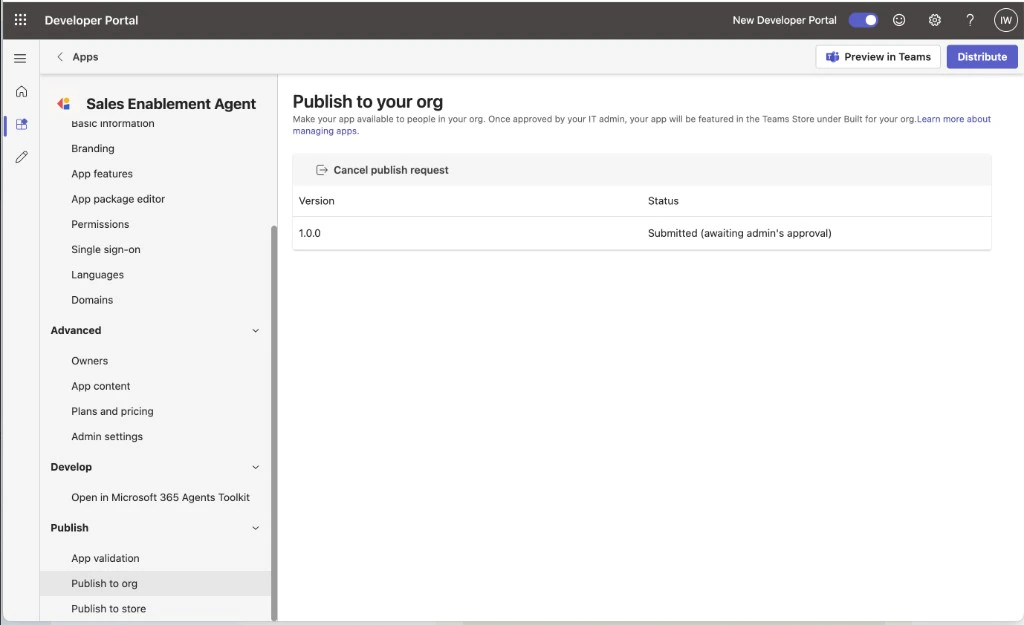
9
Return to Cassidy
After you submit the app for organization approval, return to Cassidy.Cassidy already saved the bot credentials before package generation. You can configure whether the Agent shows Knowledge Base references and collects feedback from Teams users. If you need to repeat setup or rotate bot credentials, disconnect the deployment and connect Microsoft Teams again.
Admin approval and installation in Teams admin center
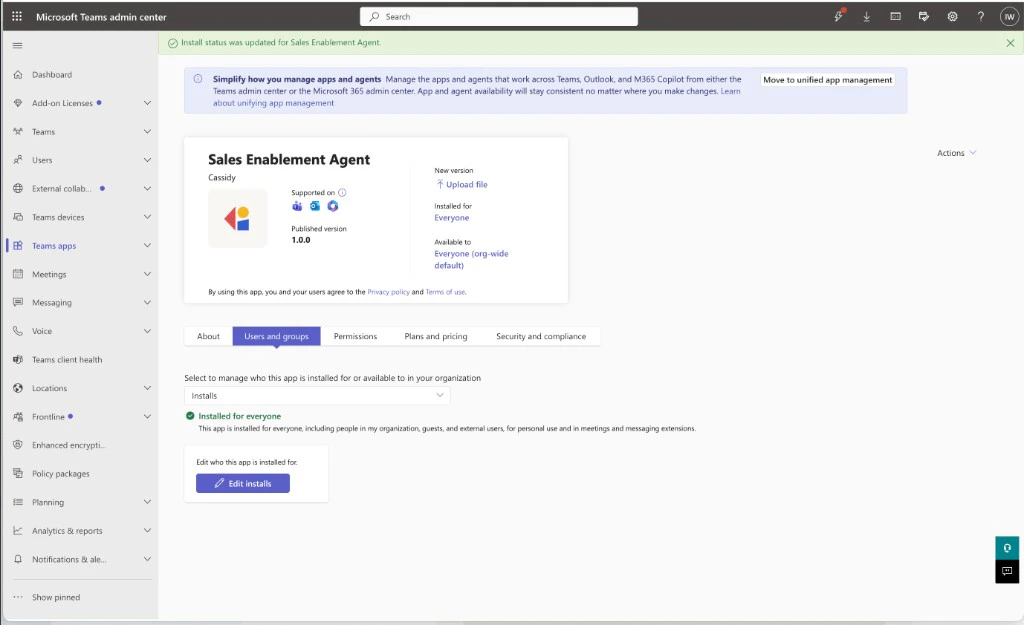
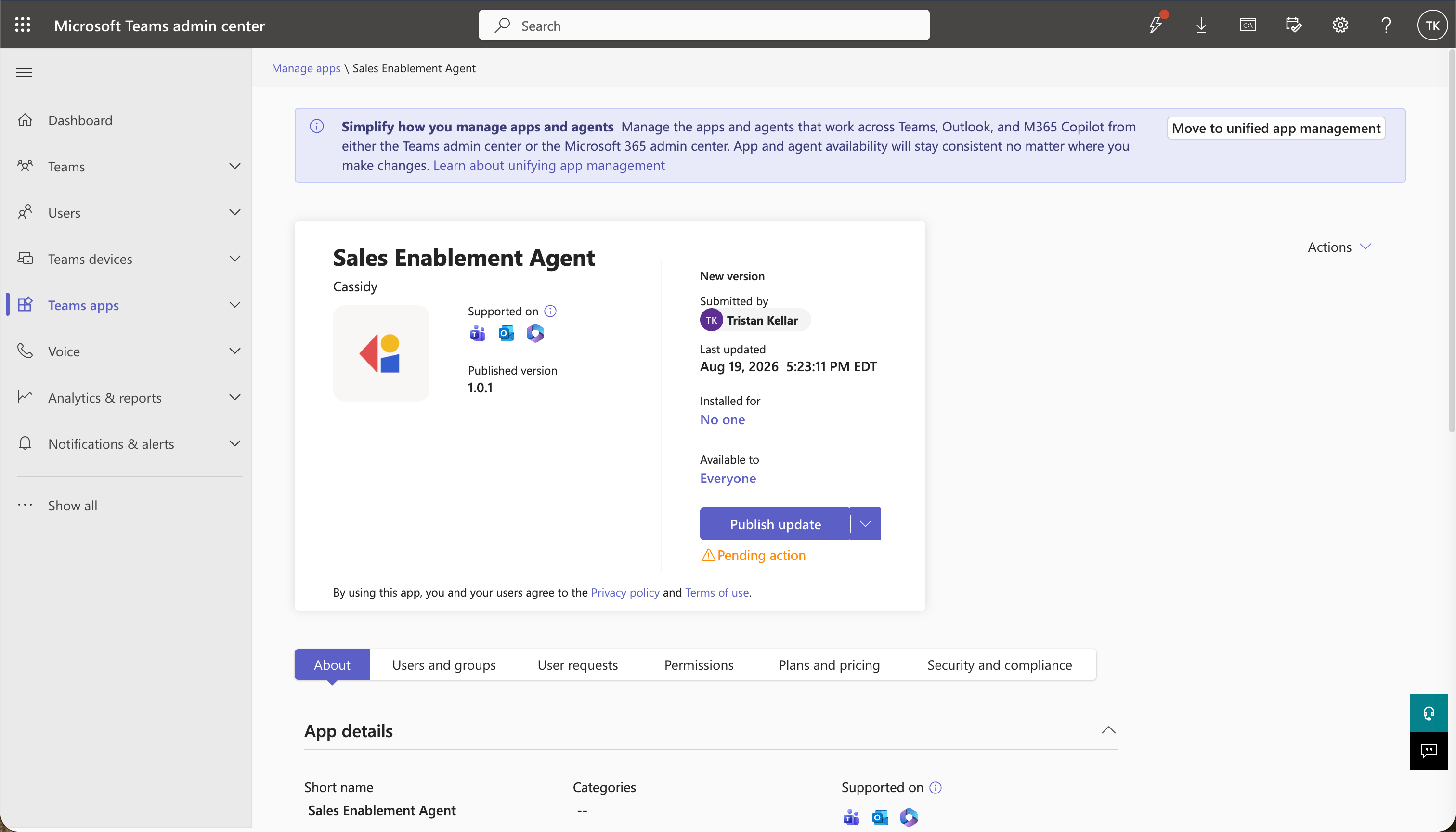
After the app is submitted to your organization, a Teams admin must approve and publish it in the Teams admin center. Publishing makes the app eligible for your organization, but the admin still needs to decide who gets it.Microsoft Teams can take a while to reflect approval, availability, and
install changes after an admin updates the app. If the app still appears as
pending or unavailable immediately after approval, wait and refresh Teams
before troubleshooting further.
1
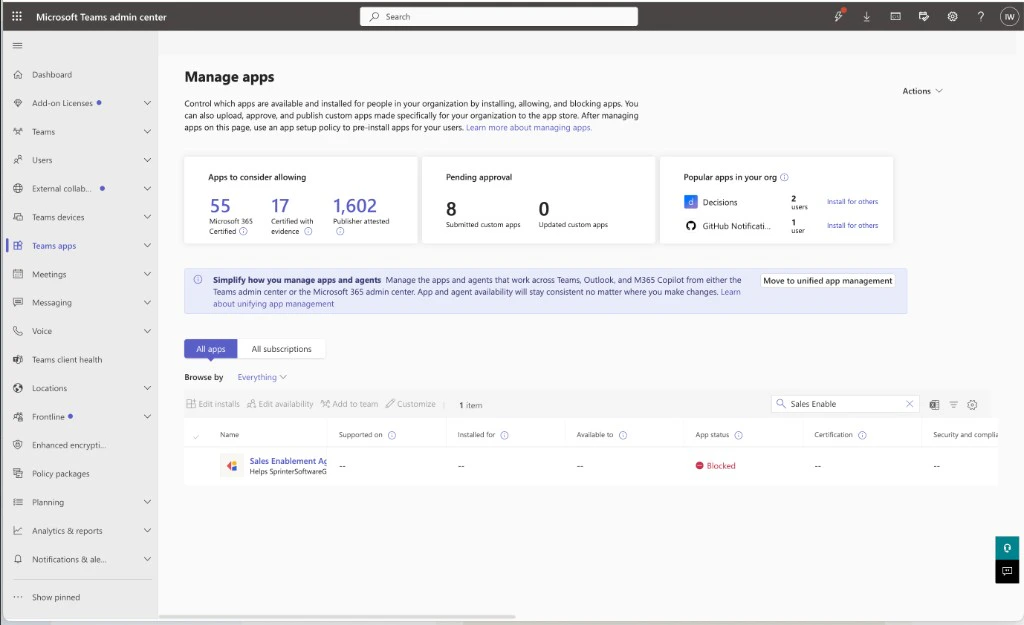
Open Manage apps
2
Review the app details
Review the app details, permissions, publisher information, icons, and scope.The app should show the same name and descriptions you entered in Cassidy.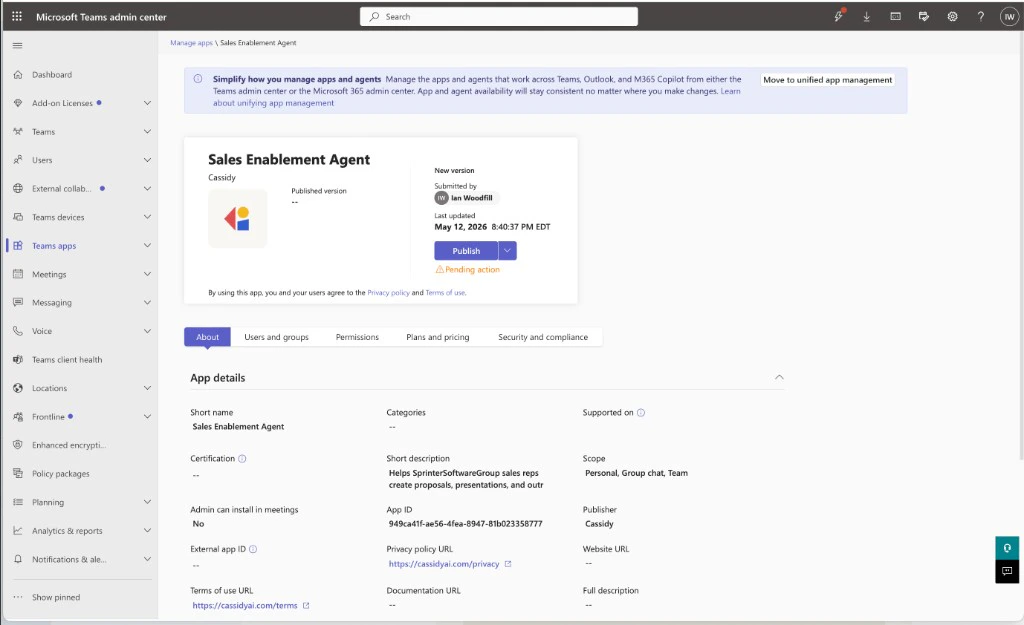
3
Publish the app
Click Publish to make the app available to users in your organization.Depending on your organization’s Teams app policies, users may still need permission to install the app.
4
Install or make the app available
Open the Users and groups tab for the app.Choose who should get the app: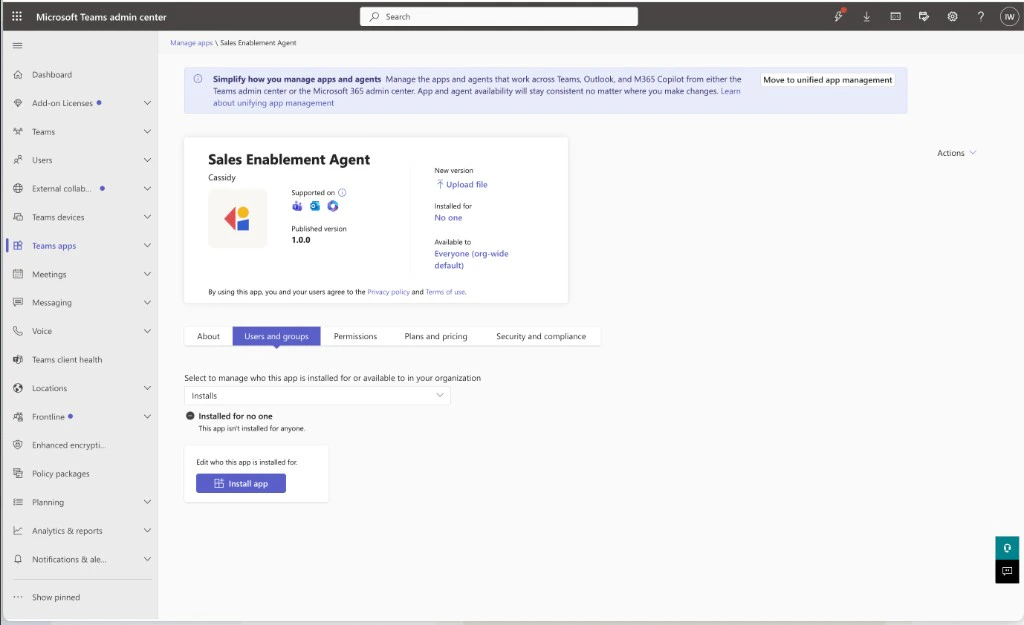
- Everyone — Install or make the app available for all users in the organization.
- Specific users or groups — Install or make the app available only for selected people or groups.
- No one — Keep the app unavailable until the admin is ready.
Update your Teams app
You can change the name, description, icons, and other details for an existing Agent app in the same Teams Developer Portal you used during setup.If you are updating an app icon, prepare the corresponding
.png file:- Color icon — A full-color, 192 × 192 px image
- Outline icon — A transparent, 32 × 32 px image with a white outline
1
Open your app
Go to the Teams Developer Portal, select Apps, and open your Agent’s app.
2
Update the app details
Under Configure, update the details you want to change: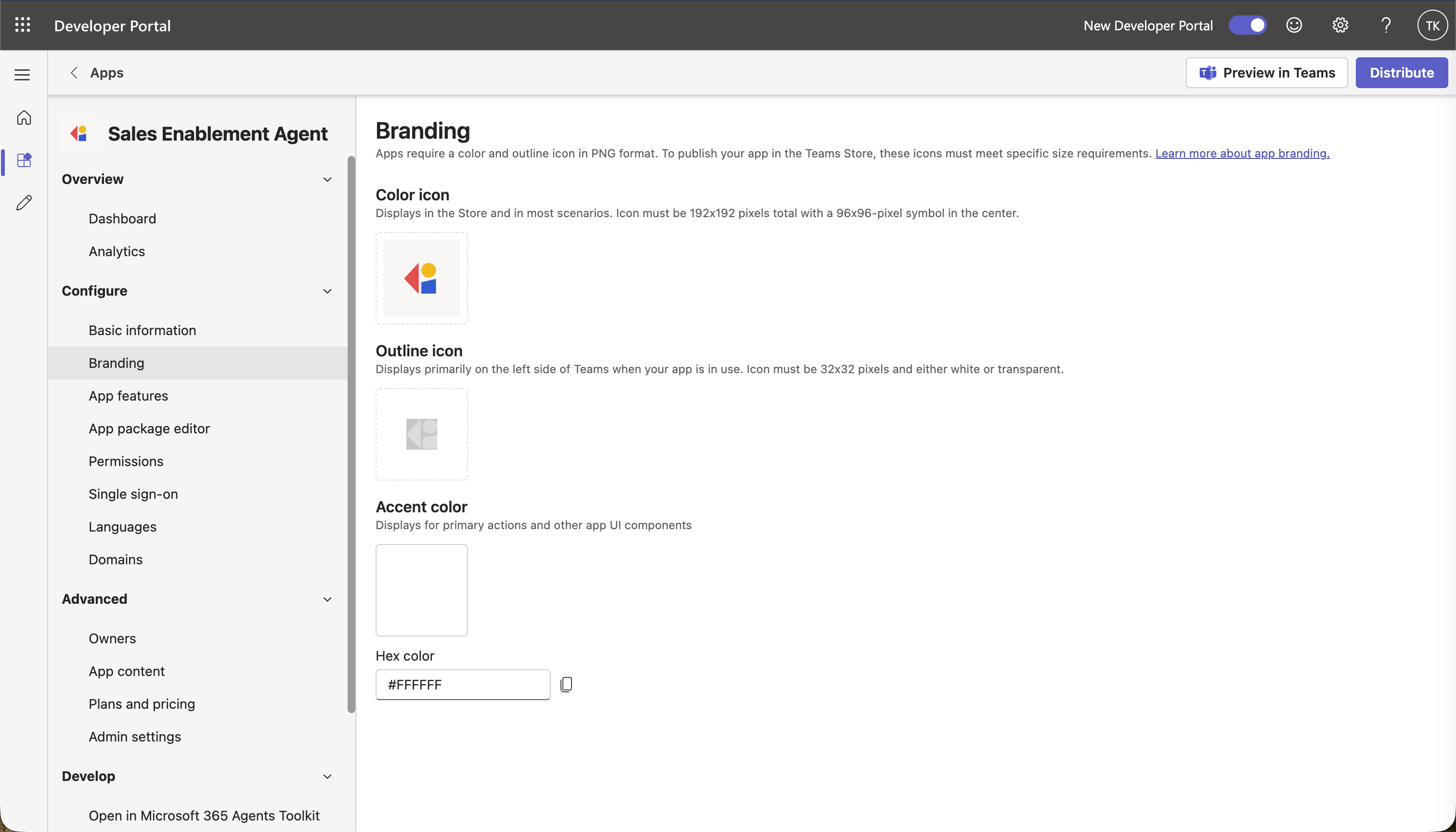
- Open Basic information to change the app name, descriptions, or other app details.
- Open Branding to replace the Color icon or Outline icon.
3
Increase the app version
Under Configure, open Basic information and change Version to a higher number. For example, change 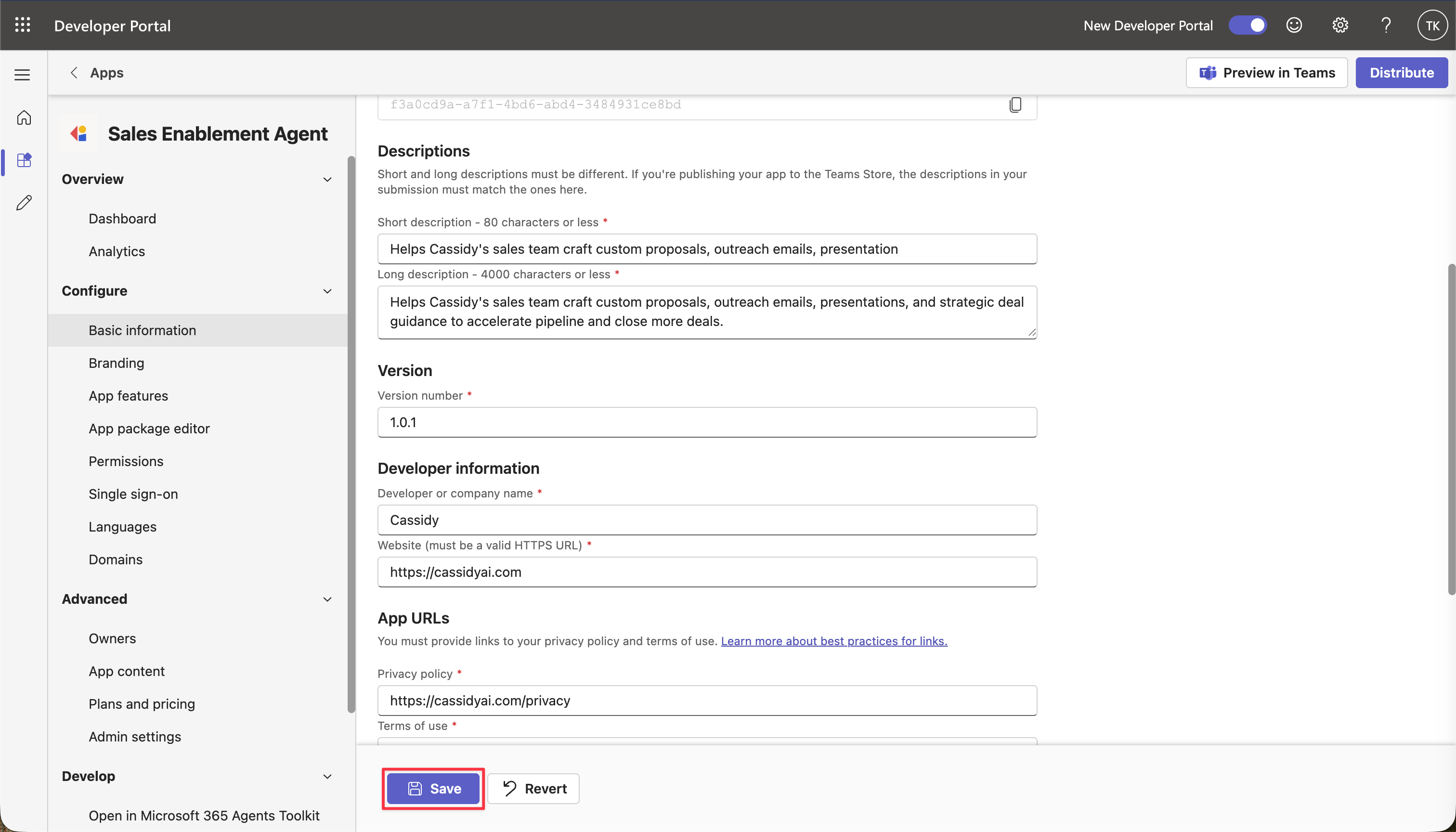
1.0.0 to 1.0.1. Click Save.4
Publish the update
Open Publish > Publish to org and click Submit app update.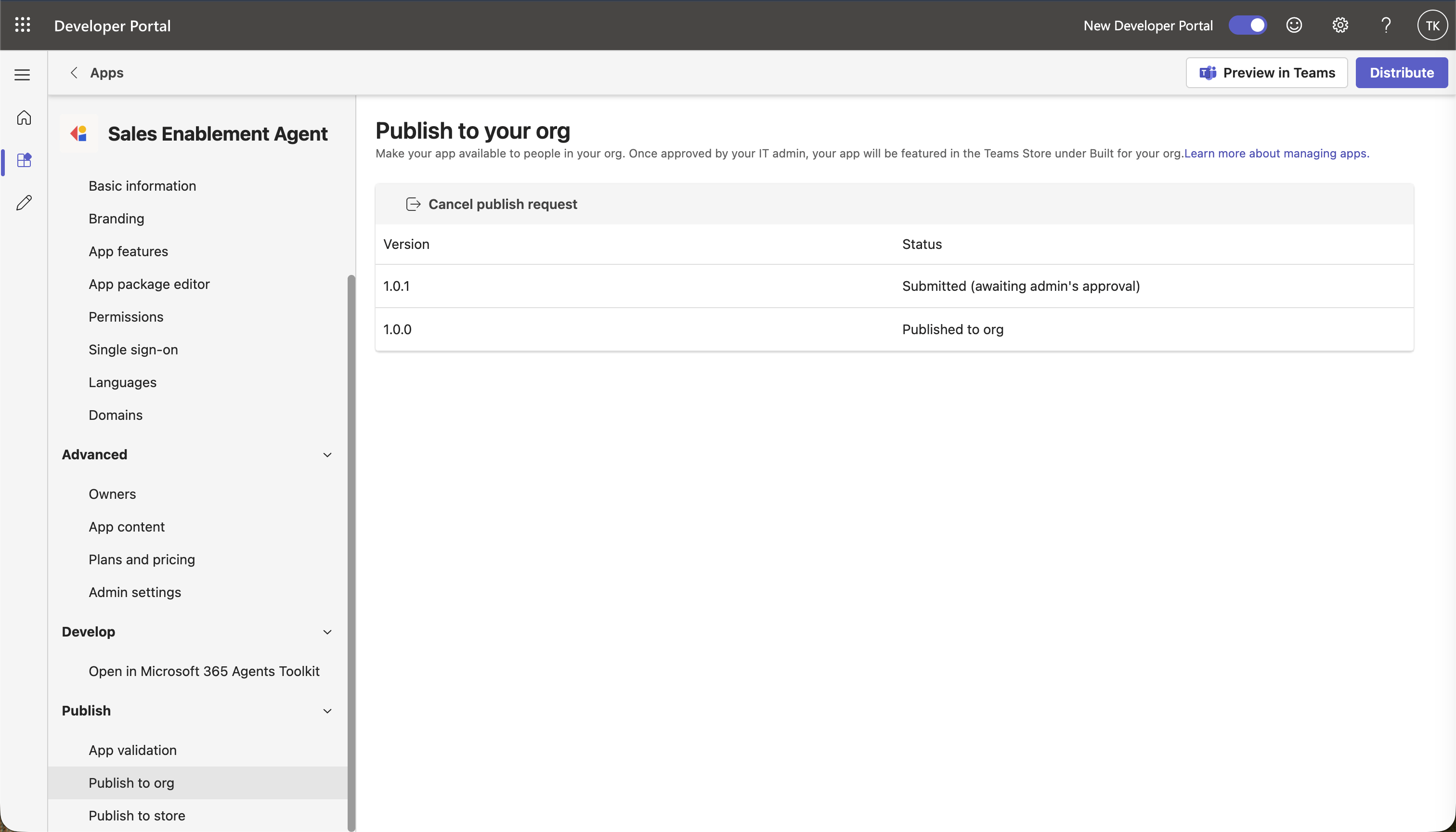
Chat with your Agent in Teams
In a channel
To use the Agent in a Microsoft Teams channel, mention the app using @ followed by its short name. Start a new post and @mention the Agent — it will respond in that post’s thread. The Agent only has access to that specific post’s conversation history.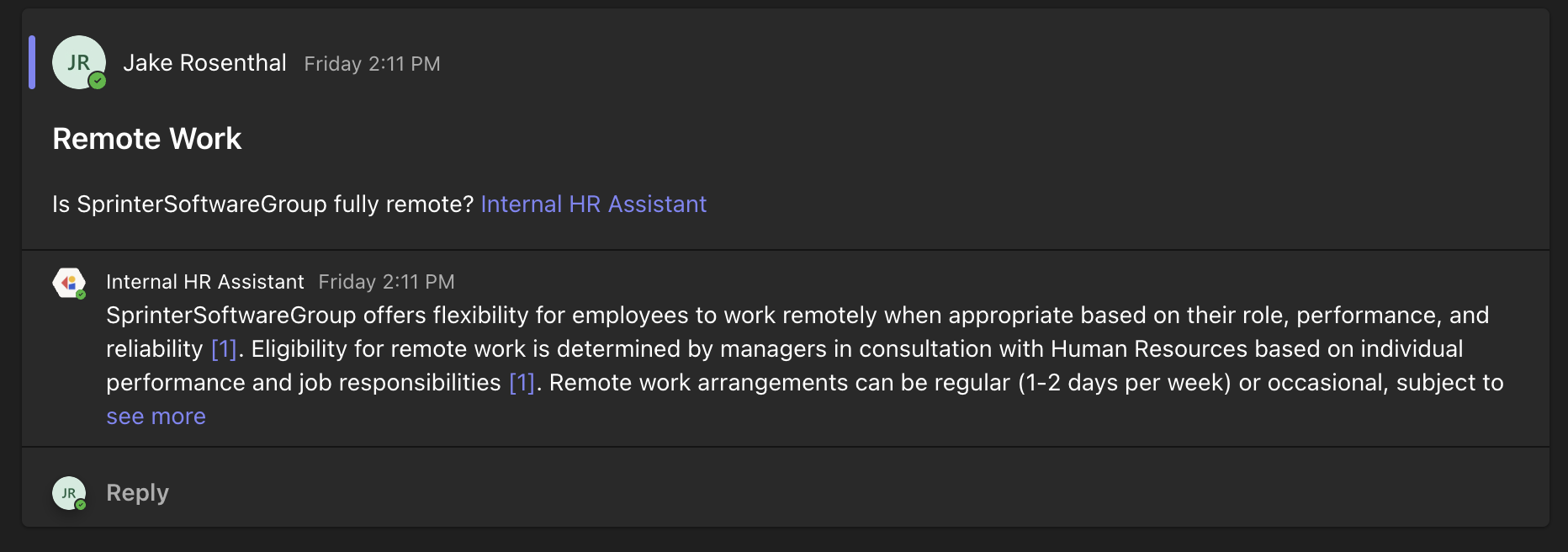
In a direct message
Start a new direct message to the Agent for a private, ongoing conversation. The Agent has access to the full chat history in DMs, giving it more context for follow-up questions.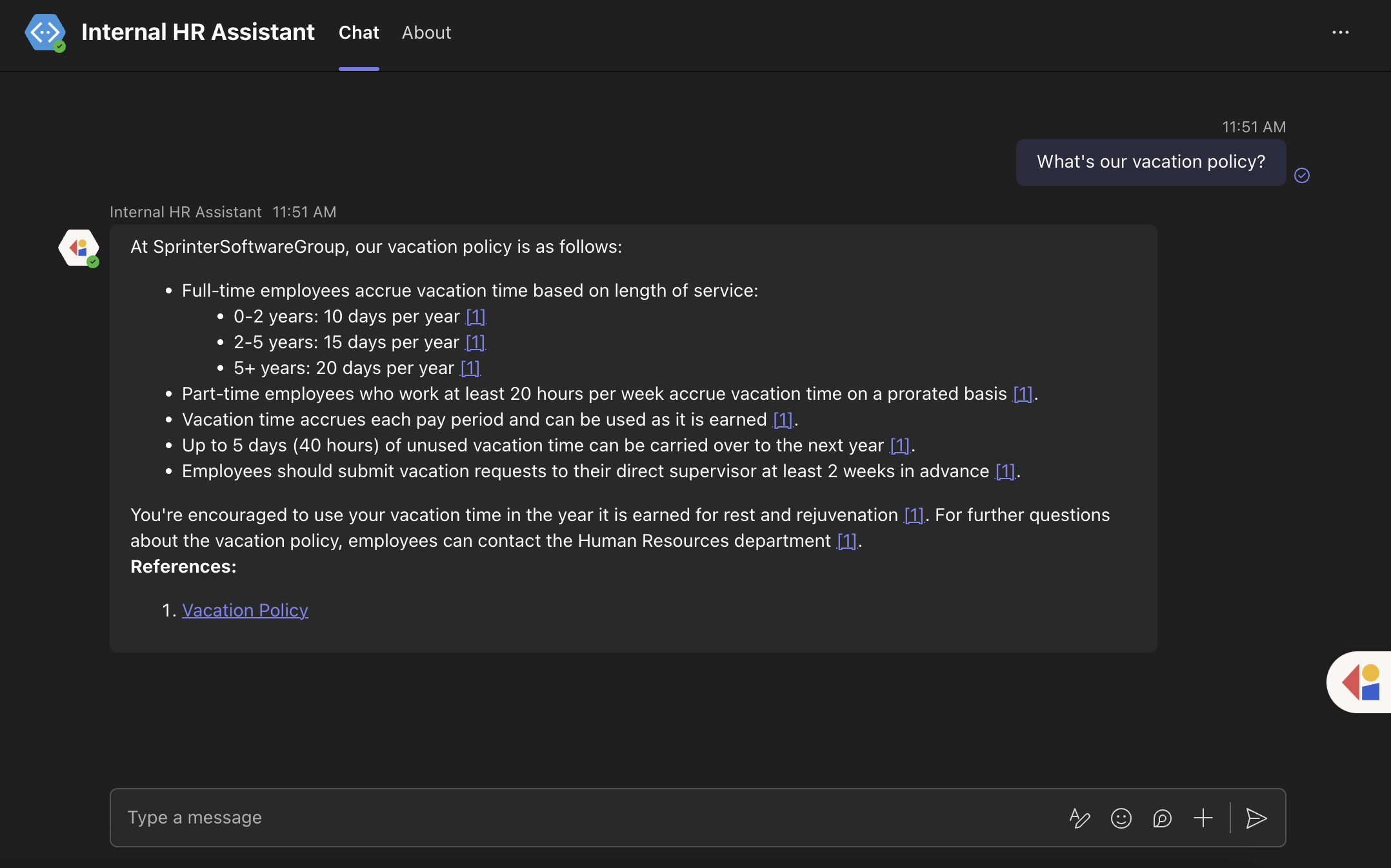
Known limitations:
- After adding or removing the Agent, the Teams app list may take a moment to update
- Bots in private channels are not supported
- Bots cannot see the subject line of messages
Next steps
Deploy to Slack
Make your Agent available in Slack channels and DMs.
Deploy to Google Chat
Add your Agent to Google Chat spaces.
Deploy via email
Deploy your Agent to a dedicated email address.