

Access utility variables
1
Open the variable selector
While editing an action’s prompt or input field, type # or click Insert Variable. A dropdown appears showing trigger inputs and action outputs.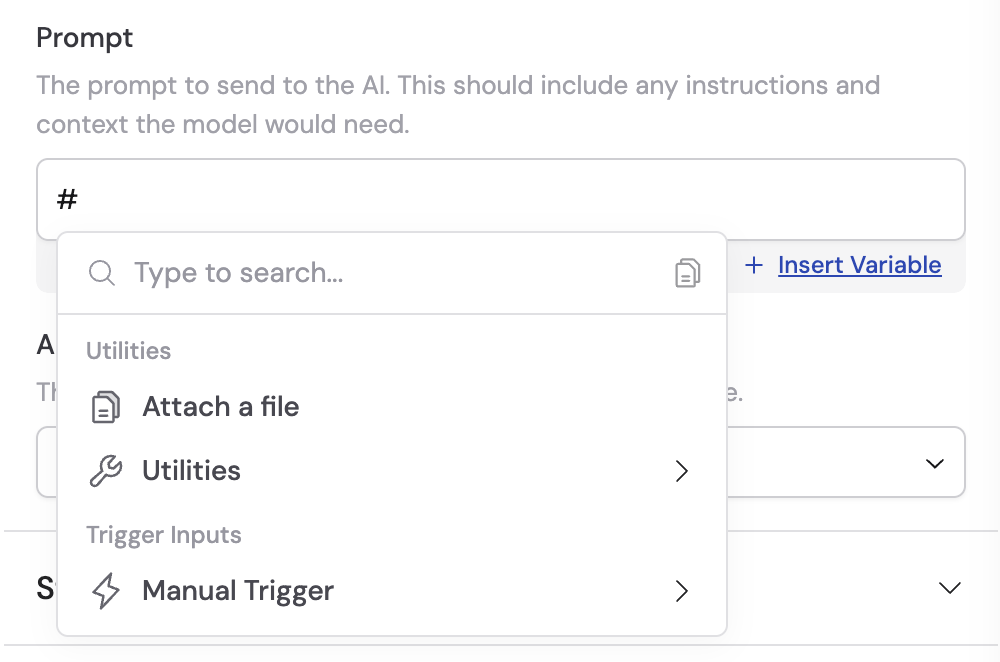
2
Navigate to Utilities
In the dropdown, hover over Utilities to expand the available utility variables.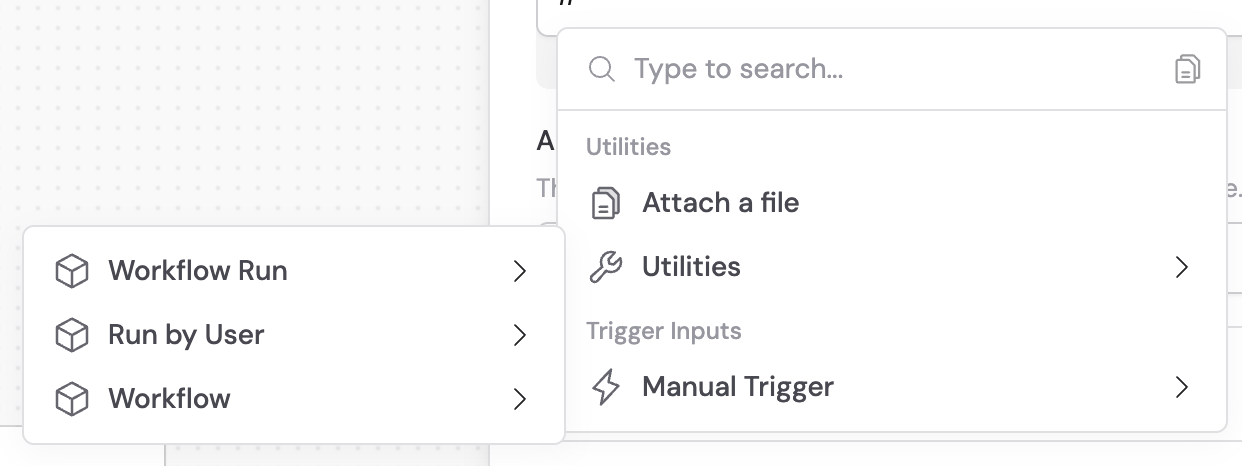
3
Select a variable
Click the variable you want to insert. Cassidy formats it with the correct syntax automatically.
Available variables
Workflow Run
Run by User
Workflow
Common use cases
Personalization
Personalization
Include the runner’s name in email outputs or customize content based on their role. For example, add
"Prepared by: #Run by User > Name" to a generated report.Logging and audit trails
Logging and audit trails
Include the Run ID, user email, and timestamp in output files for compliance tracking. This is especially useful when Workflows process sensitive data or interact with external systems.
Notifications
Notifications
Send Slack messages or emails that include who ran the Workflow, when it started, and a link to the run for quick reference.
Conditional logic
Conditional logic
Use Is Test Run with Paths to behave differently during testing vs live execution. For example, skip sending real emails during test runs, or write to a staging database instead of production.
Workflow management
Workflow management
Include the Workflow name and link in generated reports or communications so recipients can easily navigate back to the source automation.
Next steps
Reference variables
Learn how to pass data between Workflow steps using all variable types.
Structured output fields
Define consistent output formats for your Workflow actions.