

- Analyzing sales data exports to uncover trends
- Generating formatted monthly reports with charts and graphs
- Editing custom presentation templates with AI-generated content
- Transforming raw data into polished, branded deliverables
Enable Code Execution & File Creation
1
Add a Generate Text action
In your Workflow editor, click the + button to add a new action and select Generate Text.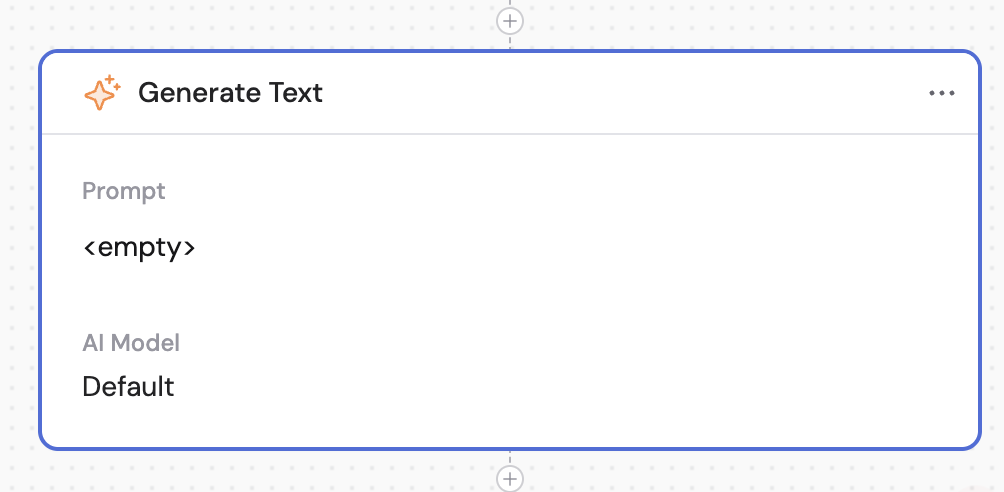
2
Enable Code Execution & File Creation
In the action’s settings panel, expand Code Execution & File Creation and turn on the setting.This allows the action to process file attachments and generate insights by writing and executing code behind the scenes.
Screenshot needed: Generate Text action settings with Code Execution & File Creation enabled.
Use an Agent with Code Execution & File Creation
The Generate Text with Agent action inherits its capabilities and advanced settings from the selected Agent. New custom Agents have Code Execution & File Creation enabled by default. If data analysis or file generation is missing, edit the Agent and enable Code Execution & File Creation under Customize > Advanced Settings.Example: Sales data analysis to report
This walkthrough demonstrates a complete data analysis use case — uploading a sales data spreadsheet, analyzing it to create insights and visualizations, and combining results into a PowerPoint presentation.1
Set up a file upload trigger
Create a Workflow with a Manual trigger that accepts file uploads. Add a file input field so users can upload Excel or CSV files containing sales data.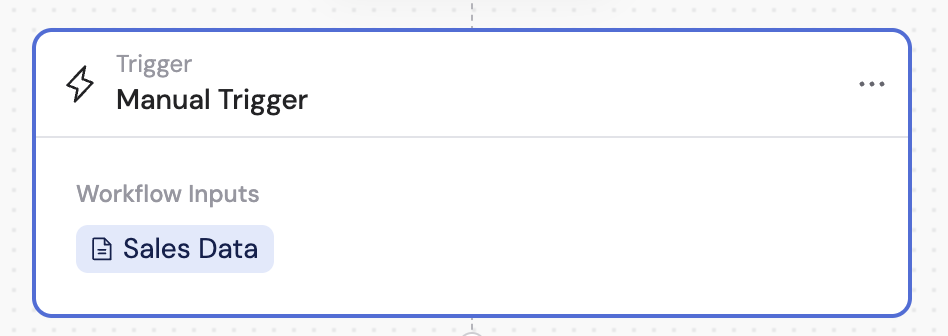
2
Add a Generate Text action to analyze the data
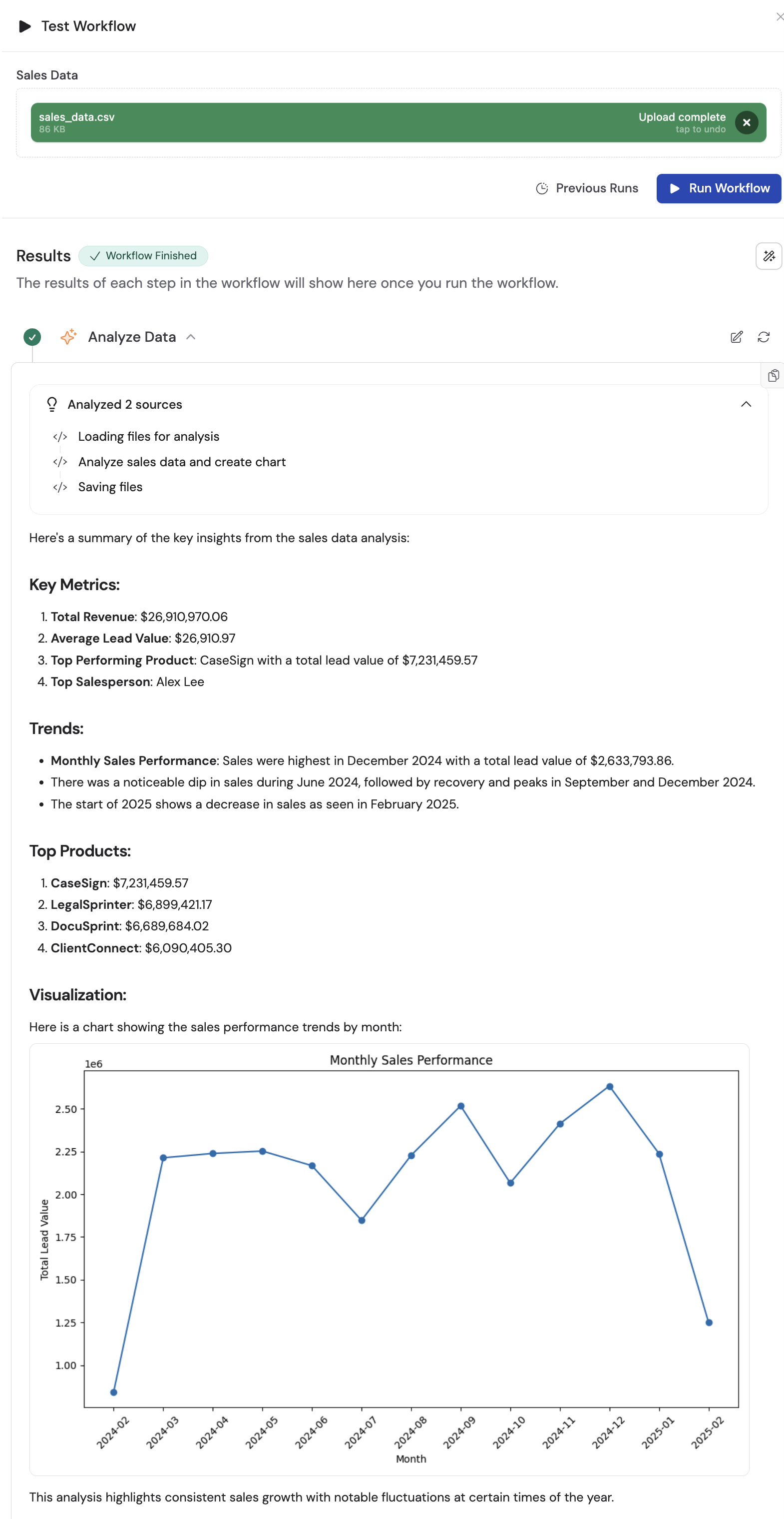
Add a Generate Text action and reference the uploaded file from your trigger in the prompt. For example:“Analyze the attached sales data and provide key insights including trends over time, top performing products, and revenue patterns. Create a summary of findings with specific metrics. In addition, generate a chart visualization showing sales performance trends by month.”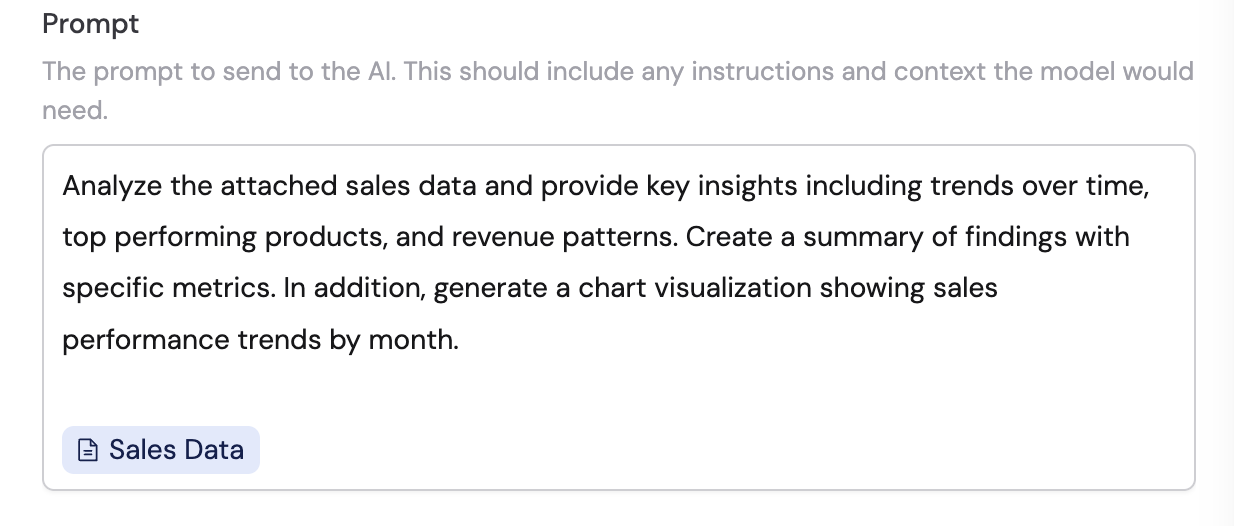
3
Enable Code Execution & File Creation
Expand Code Execution & File Creation and turn on the setting.
Screenshot needed: Generate Text action settings with Code Execution & File Creation enabled.
4
Add a second action for report generation
Add another Generate Text action to create a PowerPoint presentation from the analysis. Reference the output from the first step and prompt it to build a report:“Using the analysis results and chart referenced, create a professional PowerPoint presentation with the key findings, chart visualizations, and executive summary slides.”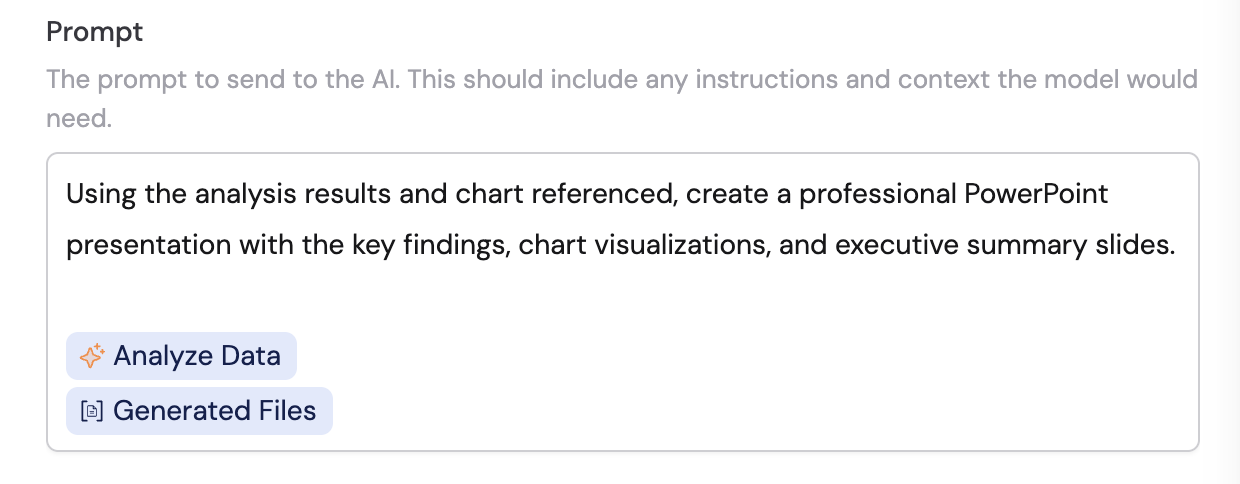
When Code Execution & File Creation is enabled on an action, a Generated Files variable appears in the outputs. Reference this variable when passing files between steps.
5
Run and review
Execute the Workflow by uploading a sales data file. The first step analyzes the data and generates charts, then the second step uses those results to produce a PowerPoint presentation.
Review results and download files
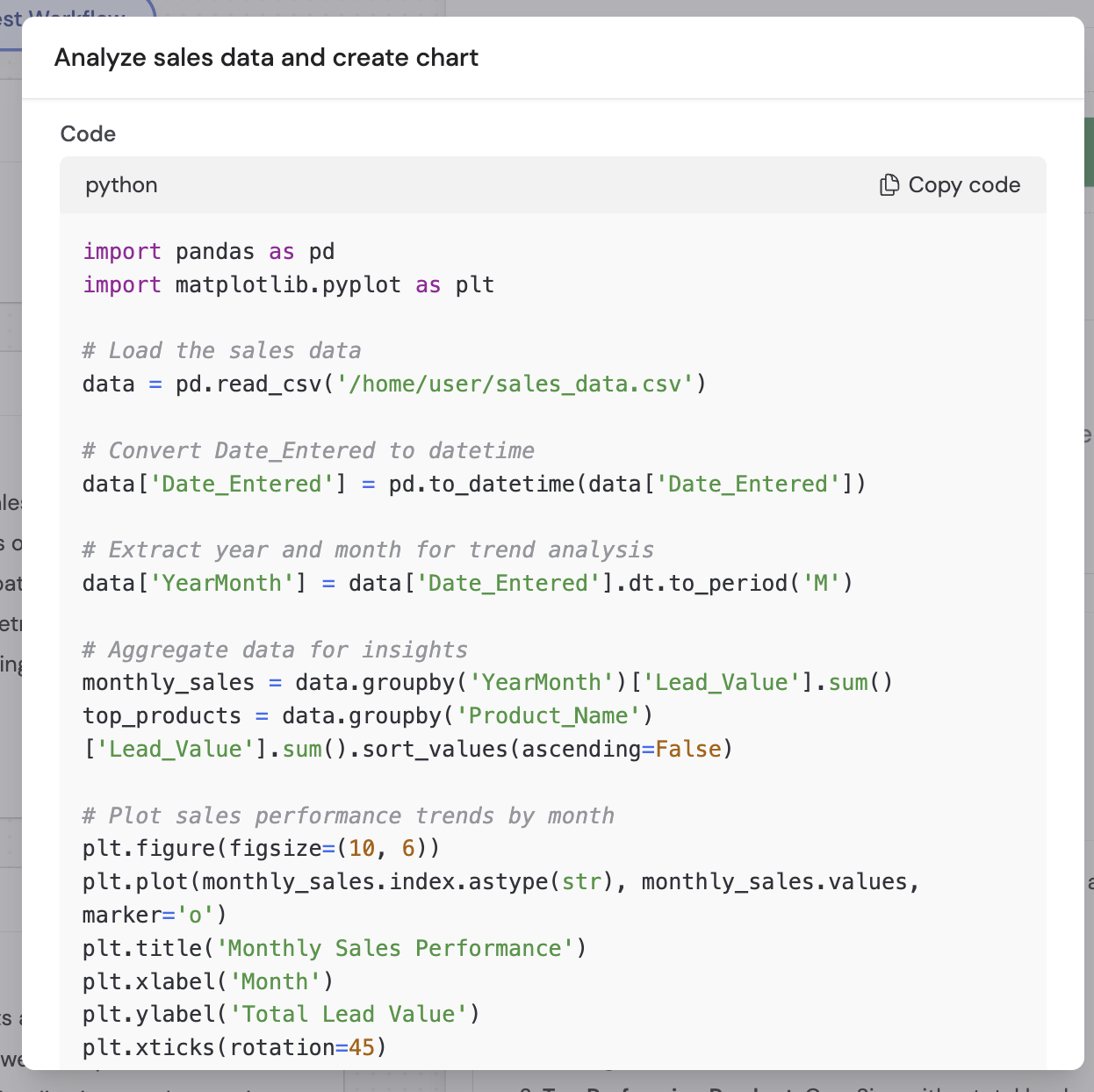
When a Workflow with Code Execution & File Creation completes, you can inspect exactly what happened and download any generated files.View the analysis code
Click Analyzed sources in the results panel, then click the code icon (</>) next to any analysis step to open a modal showing the Python code the AI wrote to process your data.
Download generated files
Any files created during the analysis — charts, presentations, reports — appear with download buttons in the results panel.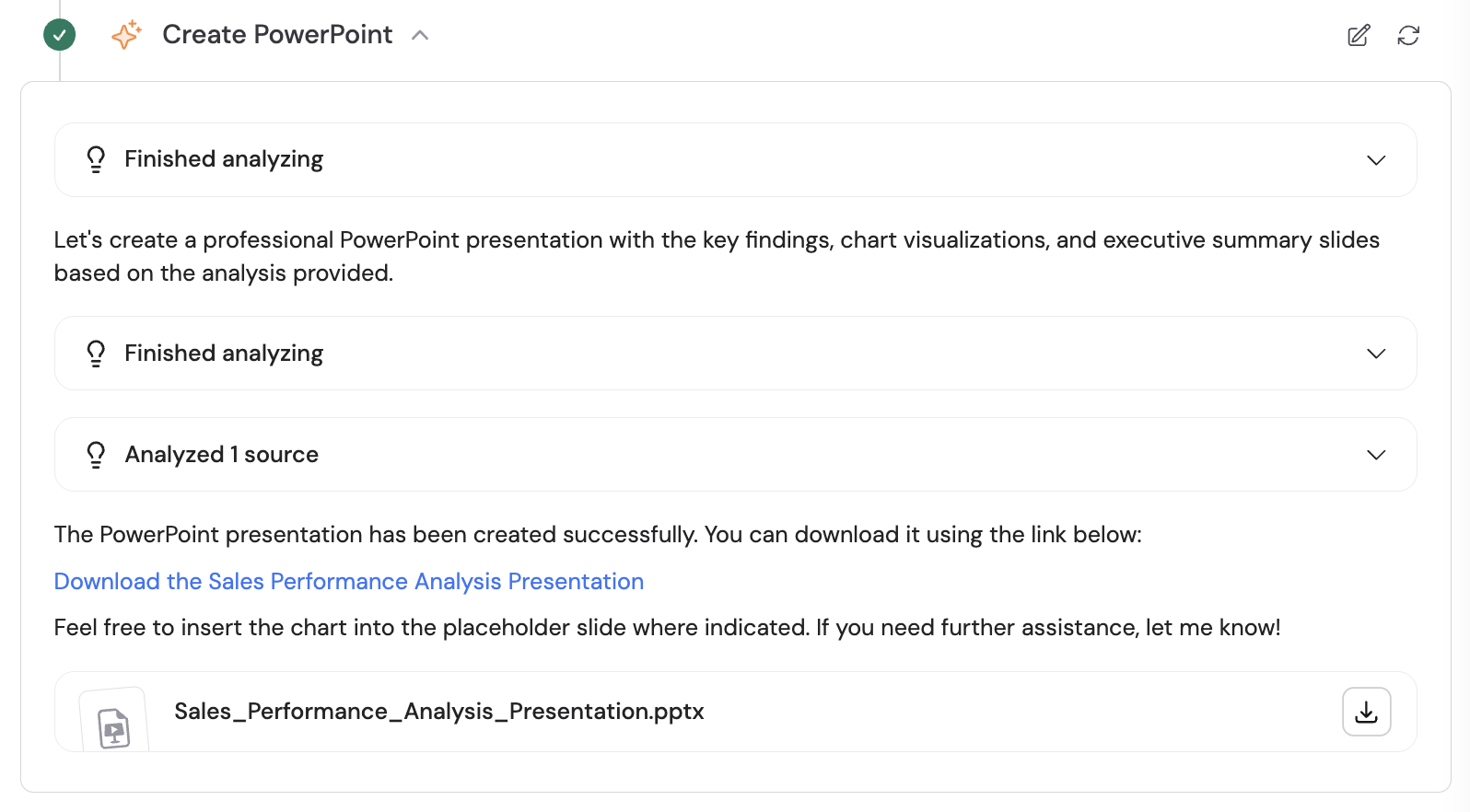
Review the output
Generated presentations include professional slides with your data insights, key metrics, trend analysis, and embedded visualizations.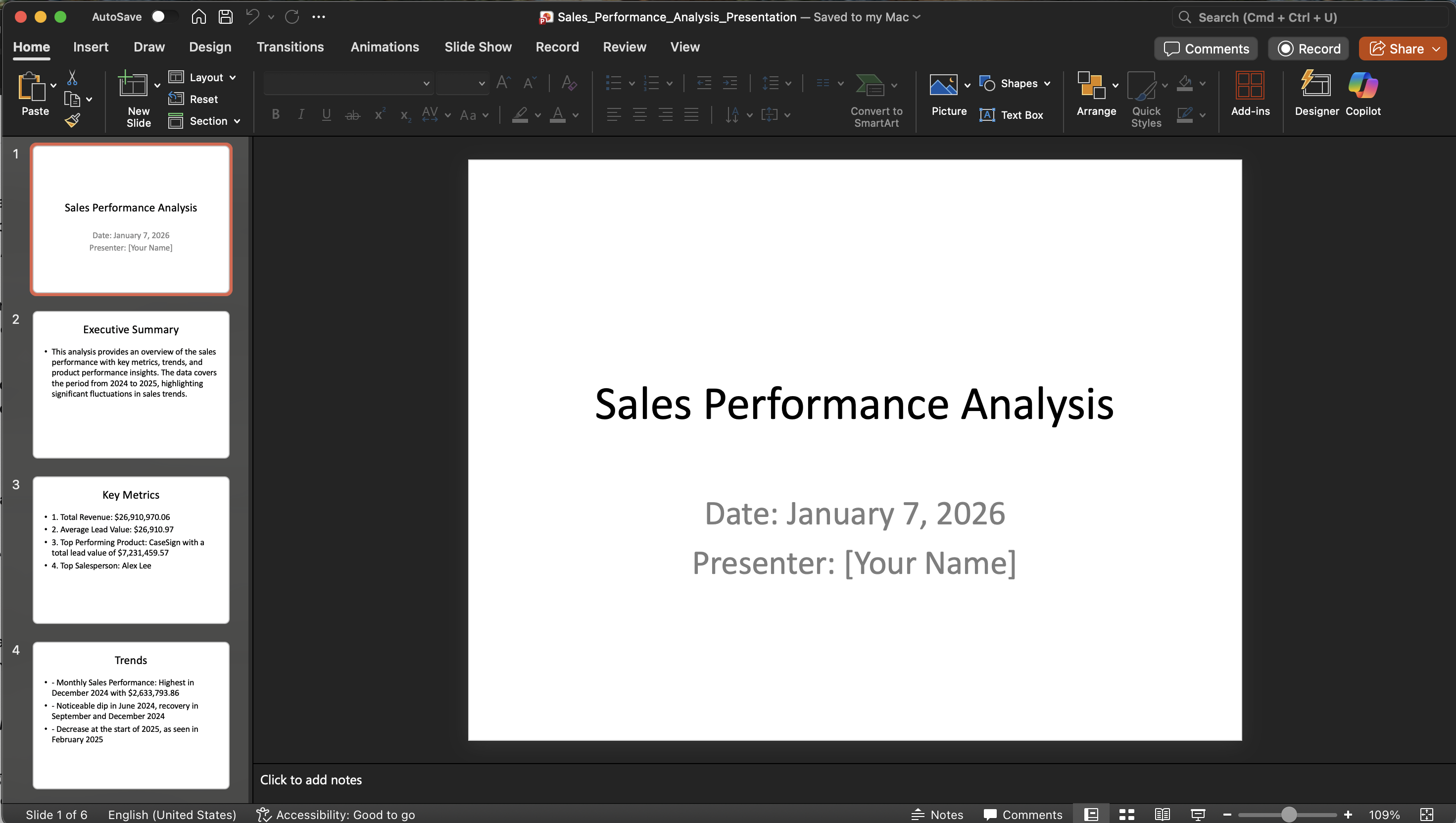
Next steps
Analyze data with an Agent
Analyze data interactively in Agent conversations.
Generate Text action
Learn more about the action that powers data analysis in Workflows.
Process data in bulk
Import datasets and run your Workflow at scale.
Create files in Cassidy
Other ways to generate files through Agents and Workflows.