

Set up the Outlook Calendar Connector
1
Navigate to your Agent
Go to Agents and select the Agent you want to configure.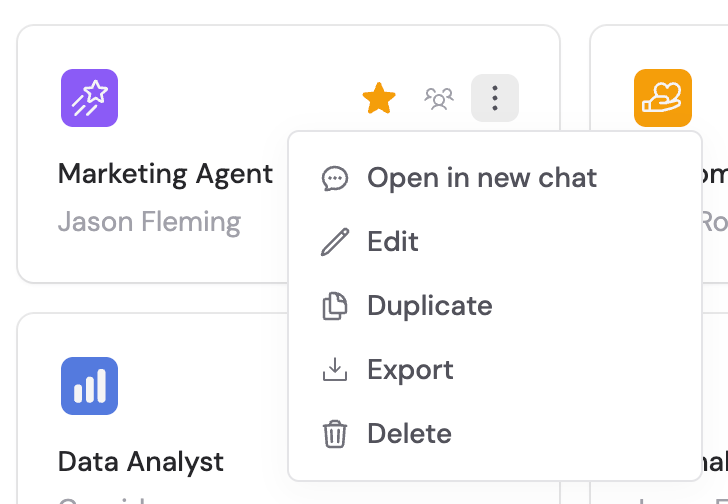
2
Open the Connectors section
Click the Setup tab and scroll to the Connectors section.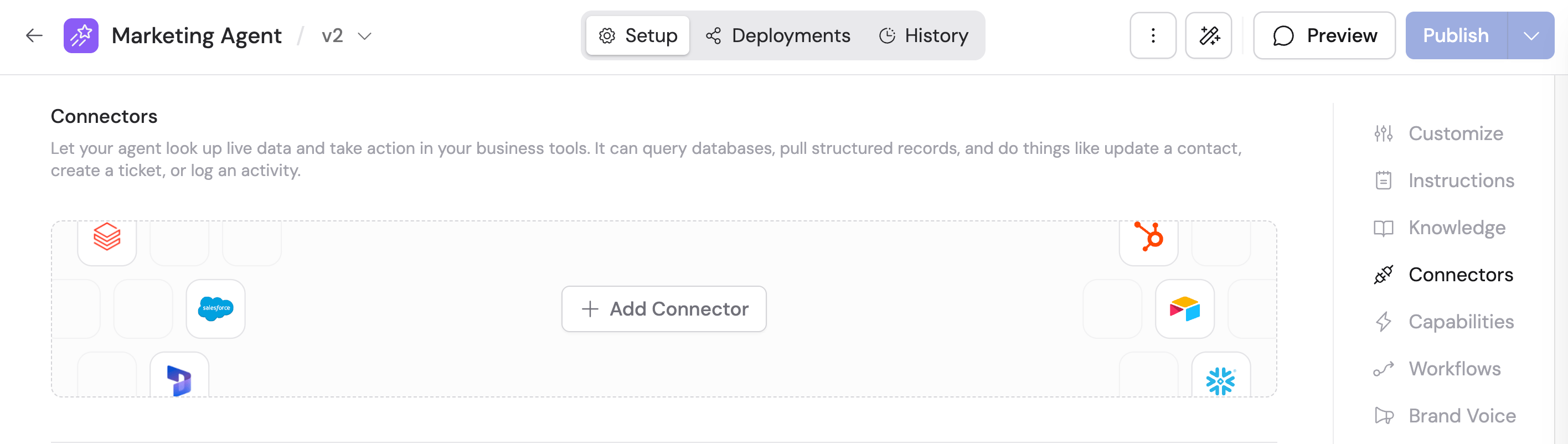
3
Add the Outlook Calendar Connector
Click + Add Connector, then select Outlook Calendar.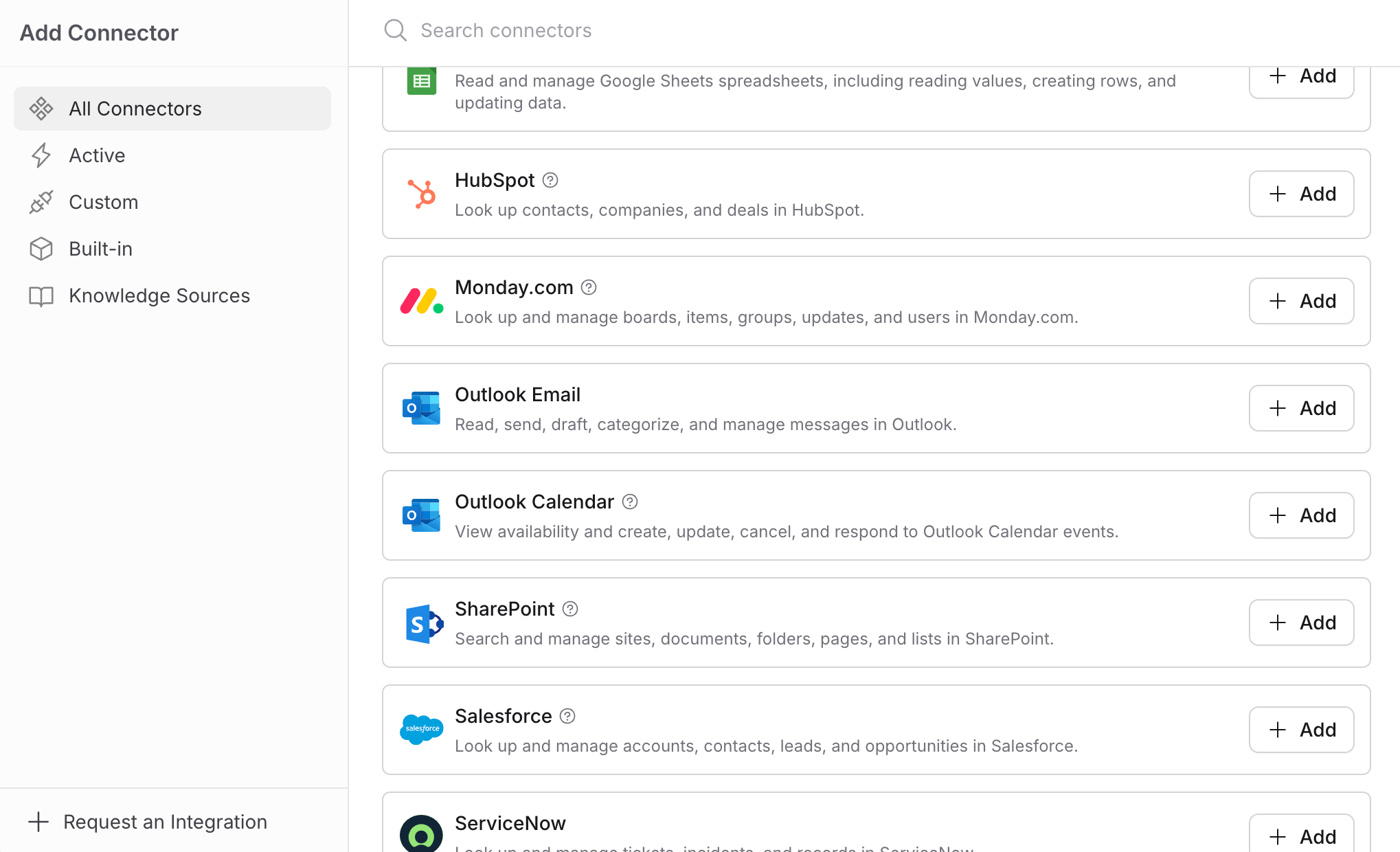
4
Choose a connection method
Select how users will authenticate: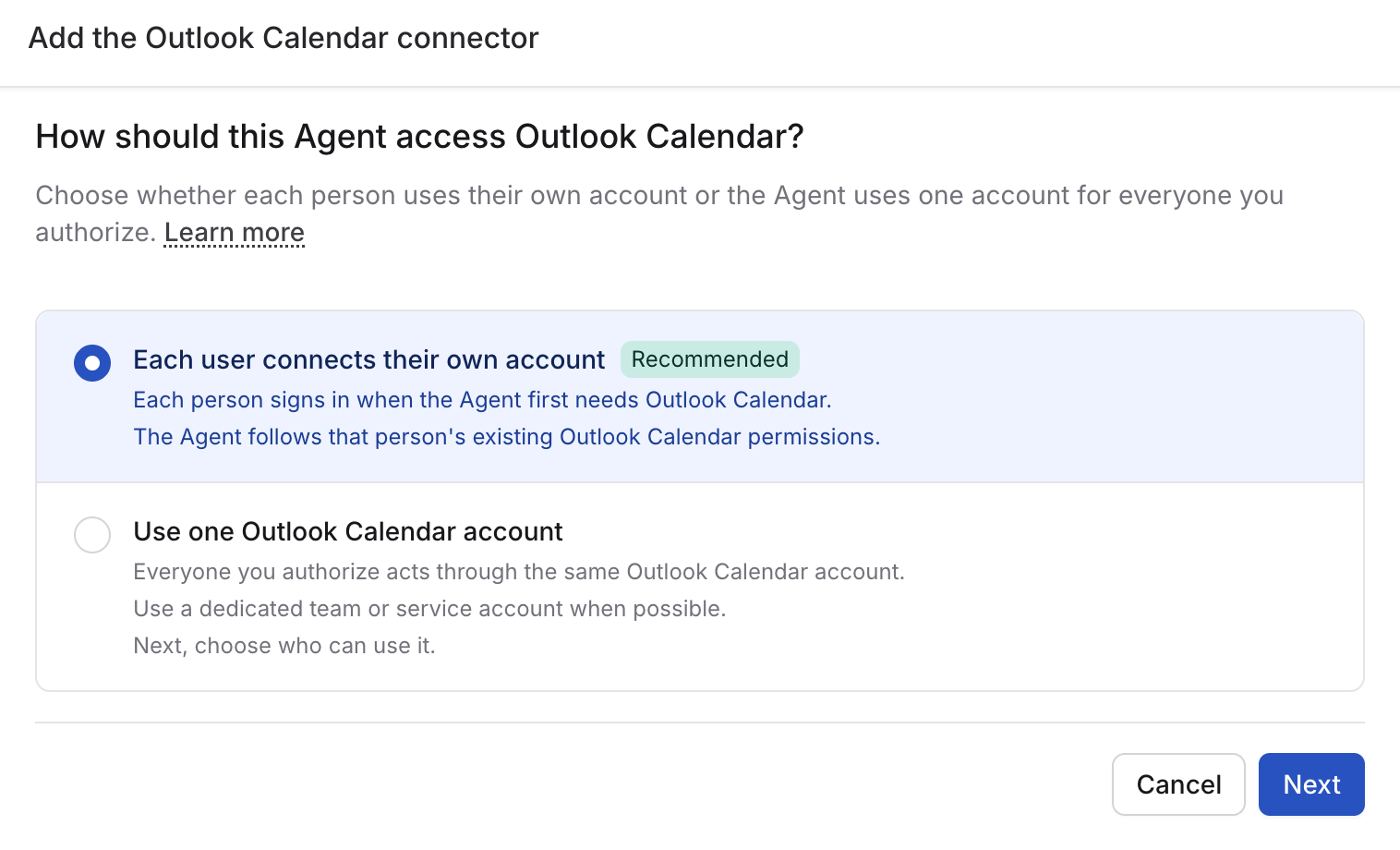
- Each user connects their own account (recommended) — each person signs in with their own Microsoft account the first time they use the Connector. The Agent follows that person’s existing calendar permissions.
- Use one Outlook Calendar account — all users access Outlook Calendar through one shared account. Use a dedicated team or resource account when possible.
5
Set up the connection
If you choose Use one Outlook Calendar account, select an existing connection or
click Create shared connection. After signing in with Microsoft, give
the connection a recognizable name and choose who can use it.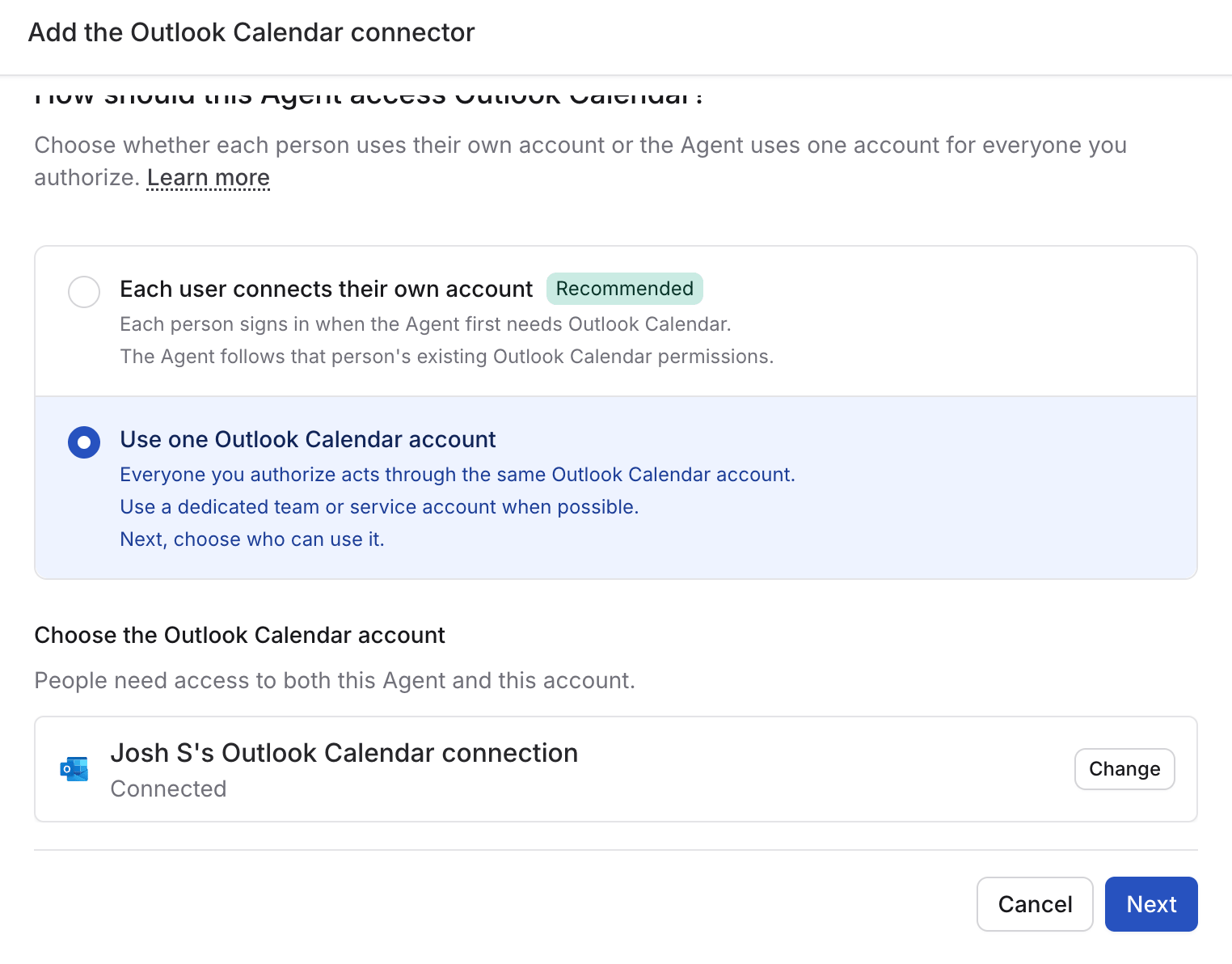
6
Configure action permissions
Set permissions for each action the Agent can perform:
- Always allow — the Agent performs the action automatically when needed
- Ask every time — the Agent asks the user before taking the action
- Disabled — the Agent cannot perform the action
- View Calendar — List Calendars, Get Calendar View, List Events, Get Event, Get Free/Busy Schedule, Find Meeting Times, Get Time Zone & Working Hours, and List Contacts. Default: Always allow.
- Create & Update Events — Create Event and Update Event. Default: Disabled.
- Respond to Invites — Accept Invite and Decline Invite. Default: Disabled.
- Cancel / Delete Events — Cancel Meeting and Delete Event. Default: Disabled.
7
Add the Connector
Click Add connector.
8
Start a conversation
Open Chat and select the Agent with the Outlook Calendar Connector enabled.If you chose Each user connects their own account, each user is prompted to sign in with Microsoft on first use. After the connection is complete, the Agent can answer questions about upcoming meetings, find open time, and, if enabled, schedule or update events.
Connect Outlook Calendar for yourself
To use Outlook Calendar in any chat, not just with this Agent, open Customize → Connectors, find Outlook Calendar, and click Connect. See Add a Connector for yourself.What the Agent can do
Depending on the permissions you enable, your Agent can:- Summarize meetings for a day, week, or any date range
- Look up event details, attendees, and online meeting links
- Check free/busy availability for colleagues and meeting rooms
- Suggest meeting times that work for every attendee
- Create events with attendees, locations, recurrence, and Microsoft Teams links
- Update the time, attendees, or details of existing events
- Accept, tentatively accept, or decline meeting invites
- Cancel meetings you organize or remove events from your calendar
Monitor Outlook Calendar actions
When an Agent uses the Outlook Calendar Connector, expand the action in the response to see its input, result, and approval status. If an action lacks the required permissions, the step shows No output data.Data security
- Real-time access — Outlook Calendar data is accessed only when the Agent needs it during a conversation and is not copied or stored in Cassidy.
- Permission controls — You decide which categories are always allowed, require approval, or are disabled.
- Per-user accountability — Individual connections preserve each user’s own Microsoft access and make actions easier to attribute.
Microsoft permissions
Microsoft permissions
Outlook Calendar uses the same Microsoft sign-in as the Outlook Email
Connector, so the Microsoft consent screen lists both mail and calendar
permissions. The Outlook Calendar Connector only exposes the calendar actions
listed above. If your organization requires admin approval for Microsoft apps,
an administrator who has approved the Outlook Email Connector has also
approved Outlook Calendar.
Next steps
Outlook Calendar for Workflows
Trigger Workflows from new or updated events and create calendar events
automatically.
Connectors overview
Learn how Agent Connectors work across Cassidy.